Injectables · Bath
Polynucleotides in Bath.
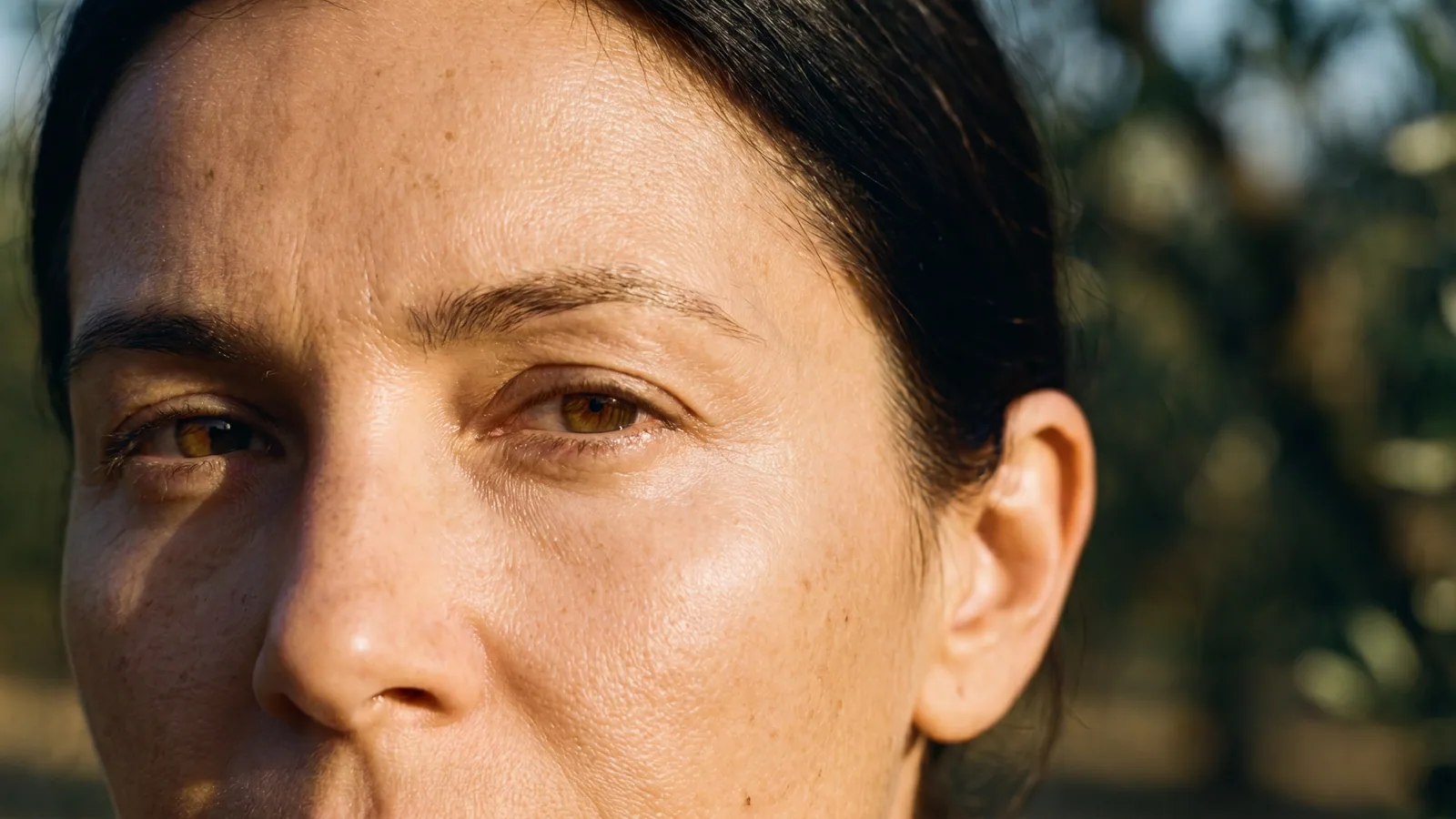
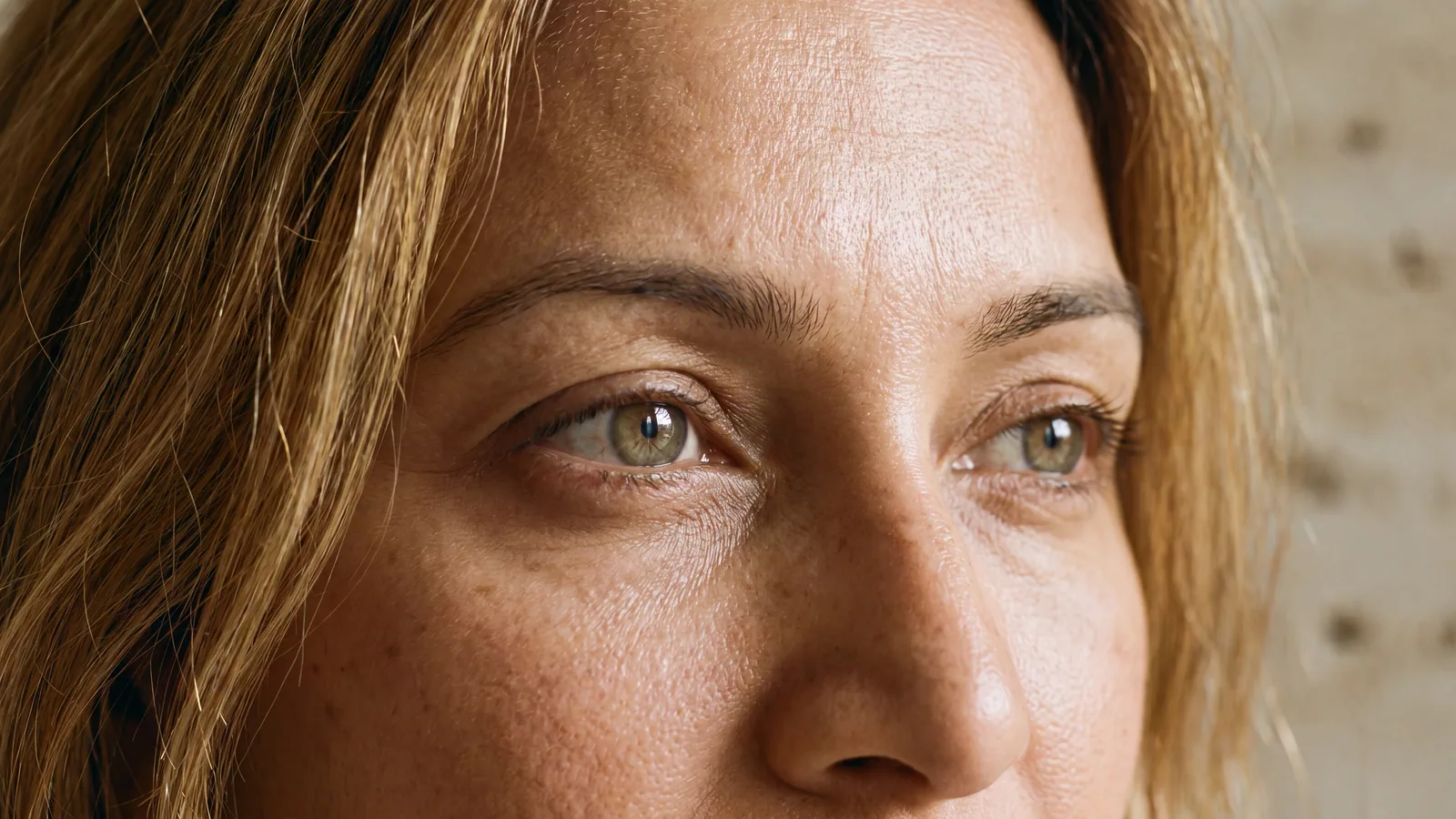
For crepey skin under the eyes.
Free · 30 minutes with Dr Beiki · Nothing to pay to book
From £295 · Rated 5.0 on Google, 37 reviews
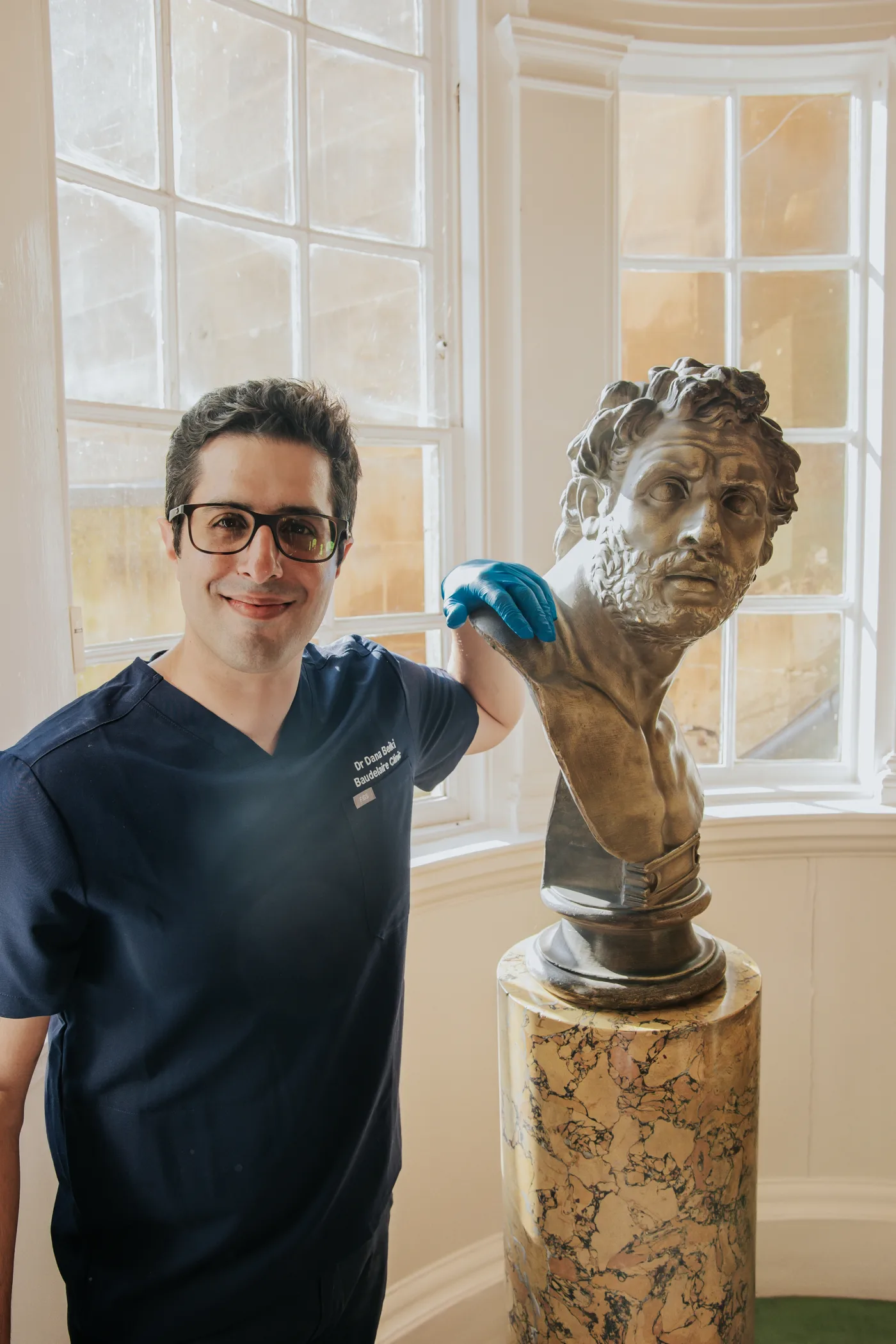
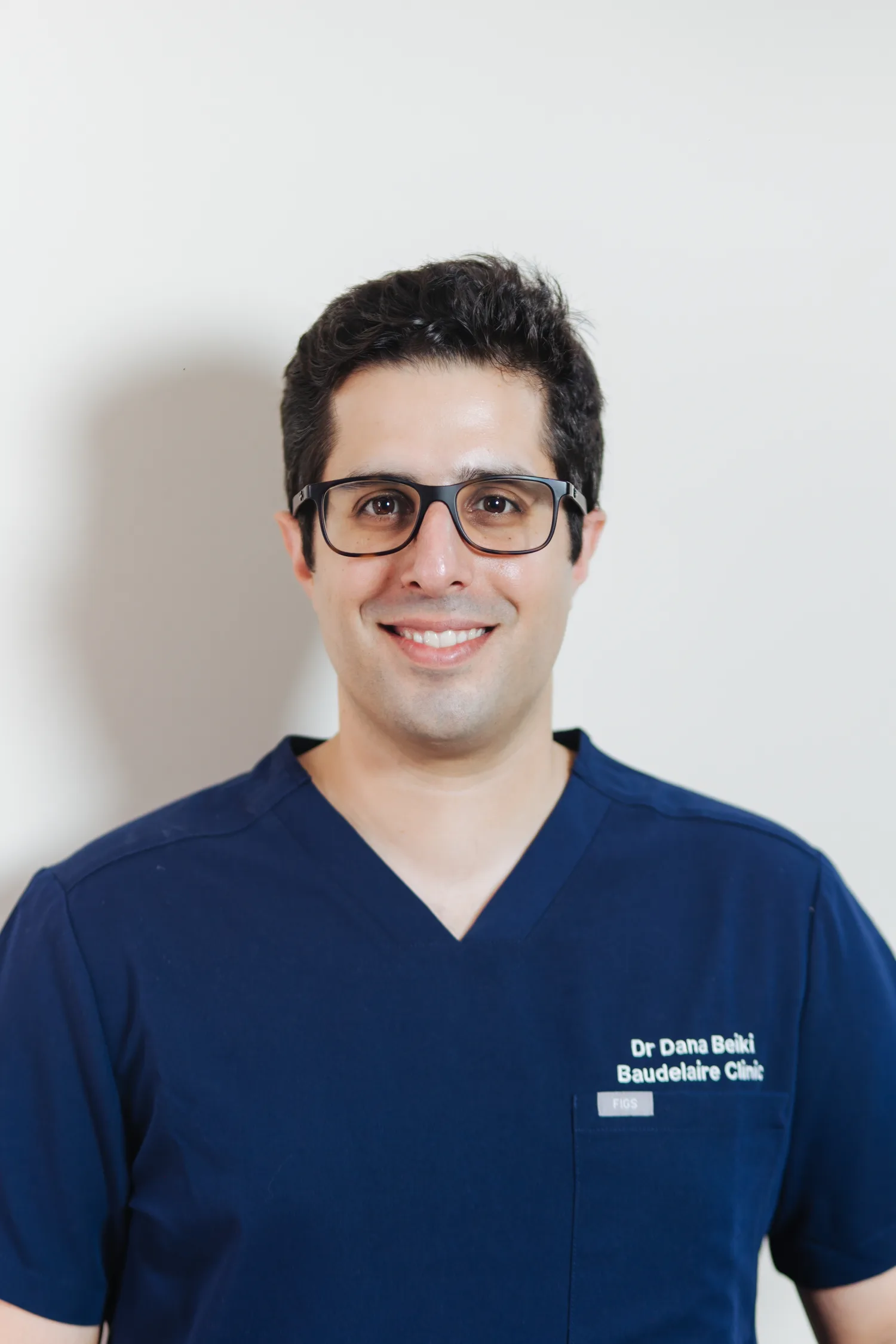
Most of the people I treat with polynucleotides are women between 35 and 55 whose under-eyes have become crepey while the structure underneath is still there. That is the skin they suit.Dr Dana Beiki
What polynucleotides are.
Polynucleotides are injections of purified salmon DNA fragments that improve the quality of the skin, not its volume.
About this treatment
At Baudelaire in Bath, Dr Beiki uses them most for crepey skin under the eyes, and on the face, neck and hands. A course is three sessions, four weeks apart, with maintenance every six months. Under the eyes, a session is £325 and a course of three £875; expect some puffiness for two to four days. The consultation is free.
The science
Polynucleotides are purified DNA chains from salmon, and they work on the skin in three ways at once. They hold water: the chains bind it in the dermis, so in my patients the skin looks better hydrated within a day or two. They prompt repair: the skin’s own enzymes cut them into smaller pieces that act on receptors on fibroblasts, the cells that build the skin’s support, which in laboratory studies respond by multiplying and becoming more active. They calm: in laboratory work the shorter fragments also damp inflammation, and they are used for sensitive skin.They are used most for skin quality in thin, delicate areas, the under-eye, the neck and the hands.They pair well with hyaluronic acid, which supplies hydration and a scaffold.
Polynucleotides under the eyes.
Crepey skin under the eyes is what polynucleotides suit most: fine lines and a thin, crepey texture, while the structure beneath is still in place. A 2026 review of under-eye treatments describes the person they suit in the same terms, though its authors say there is no agreed view yet.
In a randomised, double-blind split-face trial in 27 people, polynucleotides around the eyes, under them and at the crow’s feet, did as well overall as a non-cross-linked hyaluronic acid, and came out slightly ahead on elasticity, hydration, roughness and pore size. The trial followed the skin for 28 weeks.
Under the eye I use Nucleofill Soft Plus Eyes, a lighter product than the one I use on the face, placed in small amounts just beneath the surface with a fine needle rather than a cannula.
A course of polynucleotides under the eyes is three sessions, four weeks apart, judged at a review four weeks after the last.
For crepey skin under the eyes, polynucleotides are my first choice.
Polynucleotides for the face, neck and hands.
On the face, neck and hands, polynucleotides are used for the same work as under the eyes: the quality of the skin, its hydration, elasticity and texture, rather than its shape. They suit skin that has thinned or looks tired close up. Any tightening of loose skin is slight.
On the face I place many very small amounts just under the surface, a few millimetres apart, across the skin I am treating, rather than a few larger deposits. On the neck I use the same lighter product as under the eyes; on the hands, the strength is chosen for your skin at the consultation.
Polynucleotides, before and after.
My own patients, with written consent, before treatment and after. Results vary.
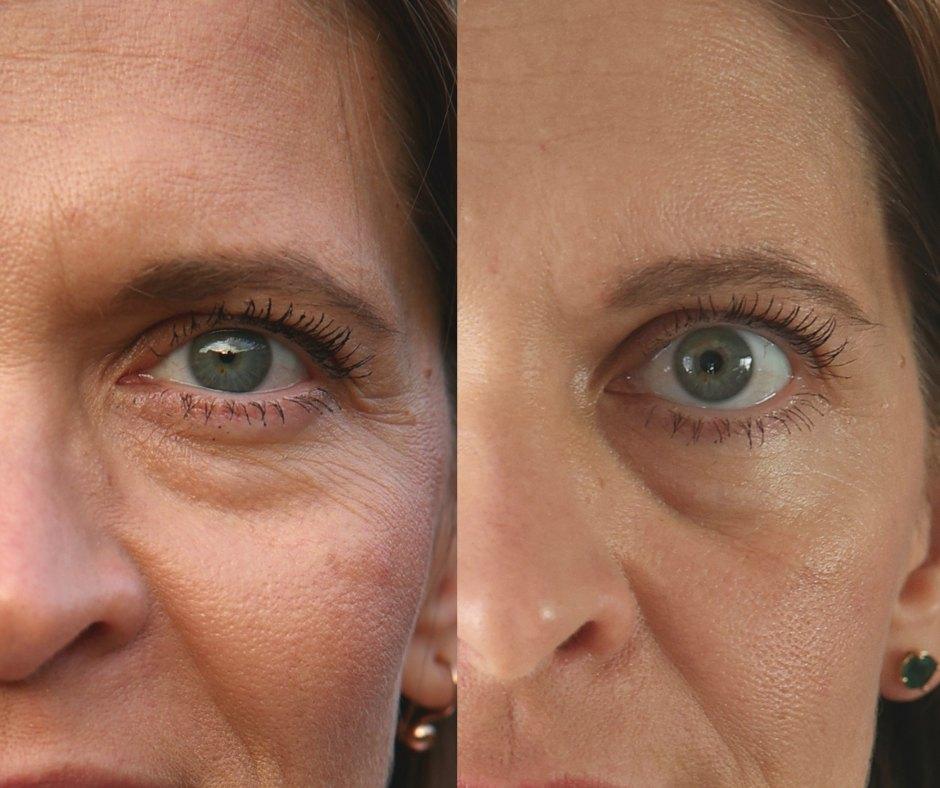
Under-eye crepiness, softened one month after the second session.
Polynucleotides · under-eye
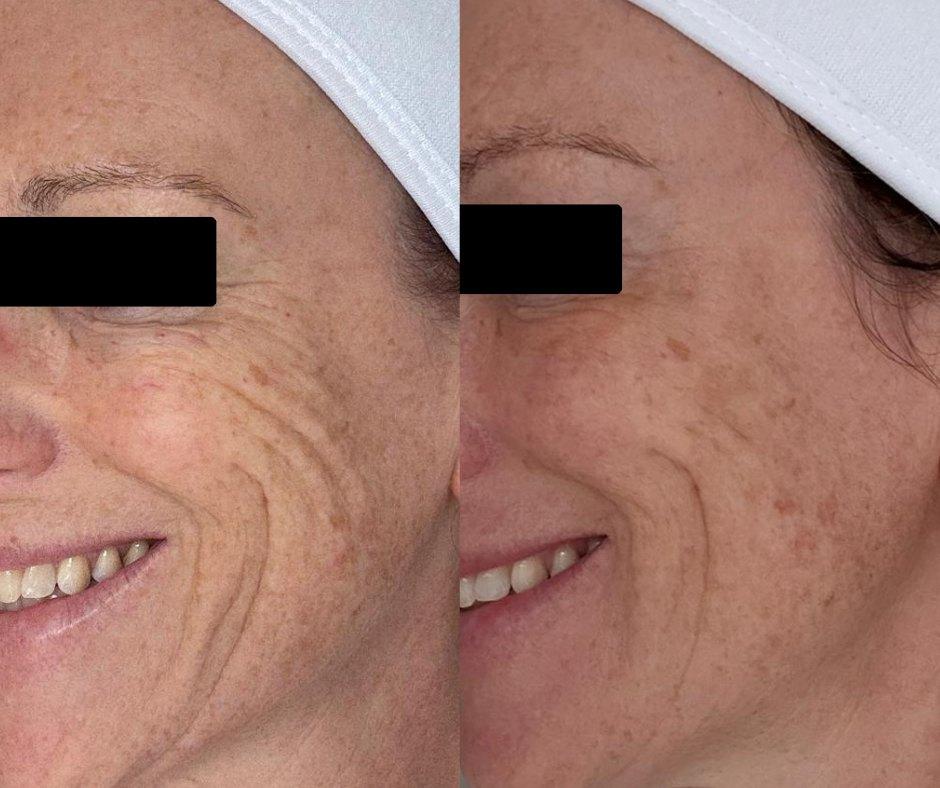
Fine lines across the cheek and the outer corner of the eye, softer one month after three sessions on the face.
Polynucleotides · face
All images are published with written consent and are typical for the protocol described, not selected for unusual response. A consultation is required to determine suitability and is not a guarantee of treatment.
Priced by area and course.
How it’s priced
Each session of polynucleotides uses one syringe: Nucleofill Soft Plus Eyes under the eyes and on the neck, Nucleofill Strong Plus on the face, and either on the hands, chosen for your skin at the consultation. Each is injected by Dr Beiki. A course of three, four weeks apart, is priced as a course and includes the review four weeks after the last session. Photobiomodulation, if you add it, is £60. The consultation is free, and the final cost of your plan is confirmed there, before anything is booked. A £40 deposit holds the appointment and comes off the price.
By area
- Under-eye · single£325
- Under-eye · course of 3 (recommended)£875save £100
- Face · single£325
- Face · course of 3 (recommended)£875save £100
- Neck · single£325
- Neck · course of 3£875save £100
- Hands · single£295
- Hands · course of 3£785save £100
- Scalp / Hair · single£350
- Scalp / Hair · course of 3£950save £100
Polynucleotides beyond the face.

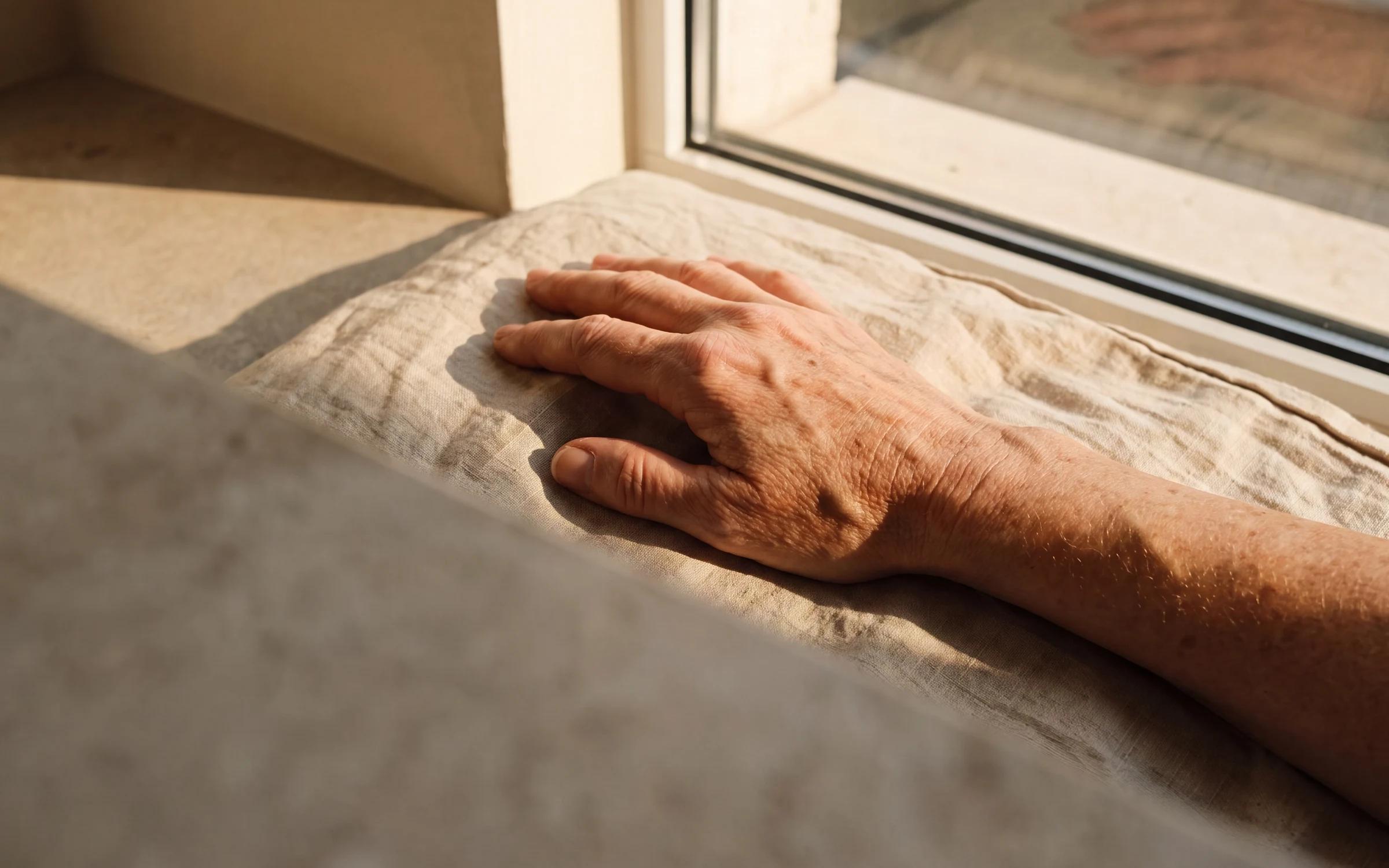
Who polynucleotides are for, and who they aren’t.
Who polynucleotides suit, and where another treatment will do more.
Made for
- Crepey skin under the eyes
- Fine lines under the eyes
- Skin that has thinned on the face, neck or hands
- Dehydrated, tired-looking skin
- Skin being prepared for a laser course, when one is planned
Where polynucleotides aren’t the answer
A hollow or a groove under the eye. That comes from loss of support beneath the skin, and polynucleotides will not fill it. The free consultation is where we work out what will.
Skin that is loose rather than thin. Polynucleotides improve the quality of the skin; loose skin needs a lifting treatment, and I will name it at the consultation.
Darkness that is pigment. That needs a different treatment.
Filler under the eye in the last three months, or permanent filler there at any time. A product that holds water can bring back swelling over filler.
A fish or shellfish allergy, or if you do not eat fish: the product is made from salmon DNA.
Pregnancy or breastfeeding.
A tendency to keloid scars, or an infection or inflamed skin in the area on the day.
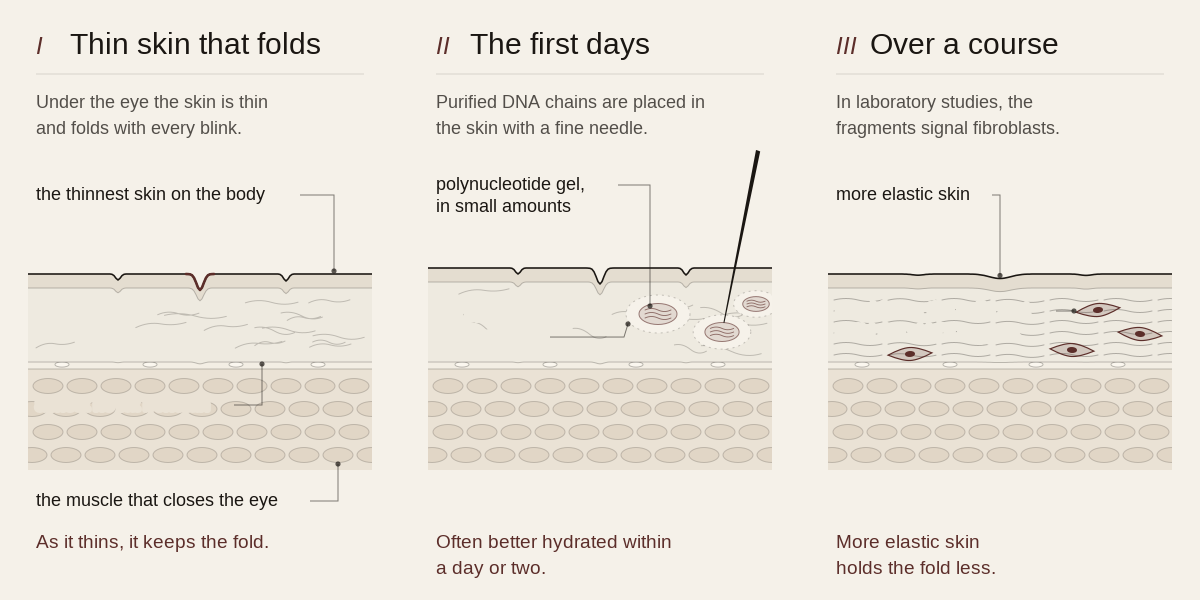
The skin under the eye works under more strain than almost any skin on the face. Five things decide whether polynucleotides will help it.
01
It is the thinnest skin you have
Printed text can be read through the skin of the lower eyelid; a few centimetres lower, on the cheek, the same text disappears. Changes show here first, and anything placed here has to be gentle.
02
Nothing cushions it
Over the tear trough there is no layer of fat beneath it, only the muscle that closes the eye and then bone. That muscle works with every blink and smile, so this thin skin folds all day, with nothing underneath to absorb the movement.
03
Why it turns crepey
While the skin is thick and well hydrated, it springs back from the fold. As it thins, it begins to keep the fold. That is the fine, crepey texture most of my patients describe as looking tired.
04
What polynucleotides change
They do not stop the movement and they do not fill. They work on the skin that takes it: more elastic, better hydrated, finer in texture. Skin in that state recovers from the fold more readily, and crepey lines usually soften.
05
What they will not change
A hollow or a groove comes from loss of support beneath the skin: with age the deep fat of the cheek deflates and the rim of the eye socket recedes. That is a question of support, and I treat it, or refer it, differently.
Your polynucleotides visit, step by step.
Consultation
Free. Your skin is assessed in daylight, at rest and when you smile. Under the eyes the first question is what the shadow is made of: thin skin, a hollow, loose skin or pigment. Any filler you have had there, and any allergy to fish, is checked before anything is planned.
Before the day
A £40 deposit holds the appointment and comes off the price. Tell us about any filler, recent vaccination or skin condition in the area.
Treatment
About 30 minutes. Numbing cream is applied first. Small amounts are placed just beneath the surface with a fine needle. Small bumps appear: under the eyes most settle within hours, though some stay for up to two days; on the face they take two to three days. Where it helps, photobiomodulation can be added at the same visit, for £60.
Aftercare and review
Under the eyes, expect some puffiness for two to four days. The second and third sessions follow at four-week intervals, and the result is reviewed four weeks after the last.
Two things about polynucleotides are rarely explained, and each changes what you should expect.
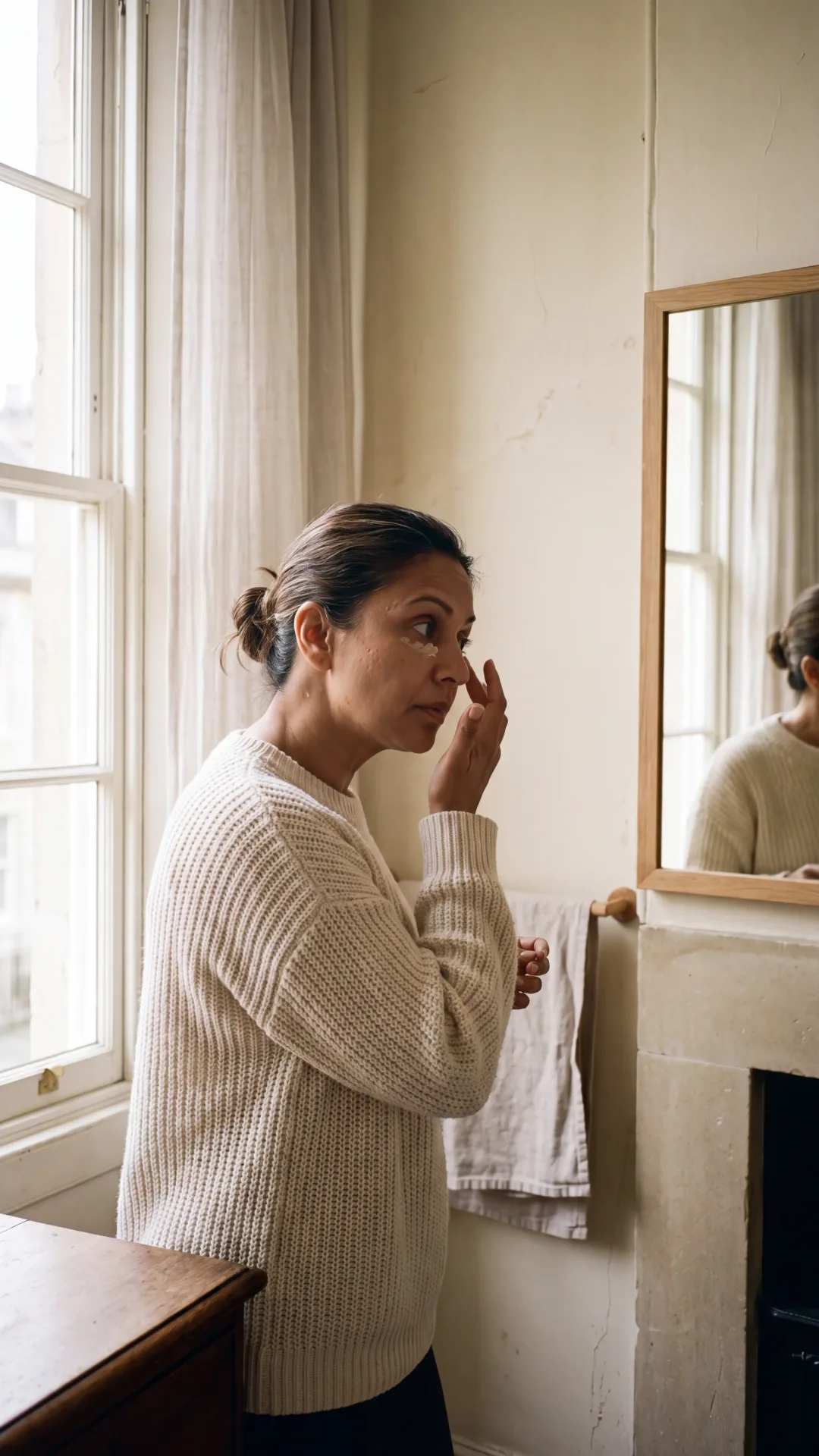
Two molecules share the name.
Shorter fragments, often called PDRN, mainly calm the tissue and support repair. Longer chains, polynucleotides, hold more water and last longer in the skin. Two products sold under the same word can differ several-fold in concentration, which is one reason two prices are not always the same treatment.
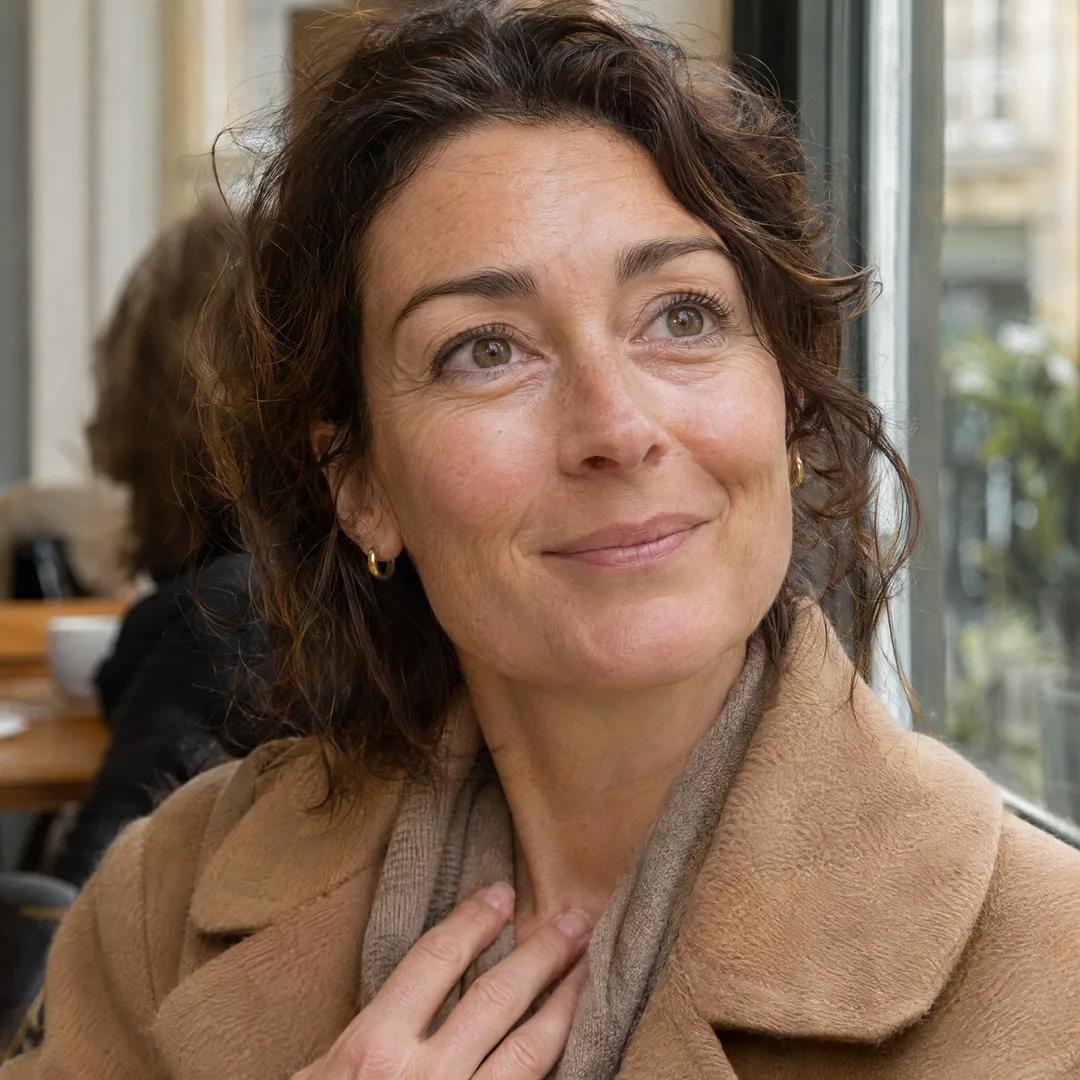

The product is chosen for the skin it goes into.
A long-chain, viscous product draws water in. In thicker facial skin that is useful. Under the eye it holds too much, and the small bumps take longer to settle. So the eye and the face are treated with different products.
When to judge it
Skin can look better hydrated the day after a session, but the change in crepiness takes the whole course. The fair moment to judge it is the review four weeks after the last session.
What polynucleotides won’t do.
The limits of polynucleotides, set out before you book.
- 01
Polynucleotides will not stop the movement of the eye. They work on the skin that takes the movement.
- 02
Polynucleotides will not show their result after the first session. The course is judged at the review, four weeks after the last one.
Two ways to start: online or in Bath.
Every plan starts with Dr Beiki looking at your face. You choose how: free and online through Le Cabinet, or in person at the Bath clinic.
Free · online · no appointment
Begin in Le Cabinet.
The private web app we give every patient, free. The three things it gives you:
Your plan
Microneedling
3 sessions
Profhilo
2 sessions
Review
12 weeks
Free · 30 minutes with Dr Beiki
Or book a free consultation.
Thirty minutes with Dr Beiki to examine your skin, answer your questions and agree your plan in person. The consultation is free, with nothing to pay to book.
- An assessment of your skin, face, expression and medical history
- A clear plan, with the options that suit your skin
- A sequenced, costed plan you take away
- A free consultation, with nothing to pay to book

The thinnest skin you have folds all day. Polynucleotides help it spring back.
Questions about polynucleotides.
What are polynucleotides?+
Are polynucleotides worth it?+
Do polynucleotides work under the eyes?+
How many sessions will I need?+
Is there downtime?+
Do polynucleotides hurt?+
What is the aftercare?+
What if I see no change?+
What are the side effects of polynucleotides?+
Are polynucleotides made from salmon? Can I have them with a fish allergy?+
When will I see results?+
How are polynucleotides different from Profhilo?+
How much are polynucleotides in Bath?+
 Le JournalPRP Treatment for Hair Loss in Bath: Laser, PRP and What Each Part Actually Does
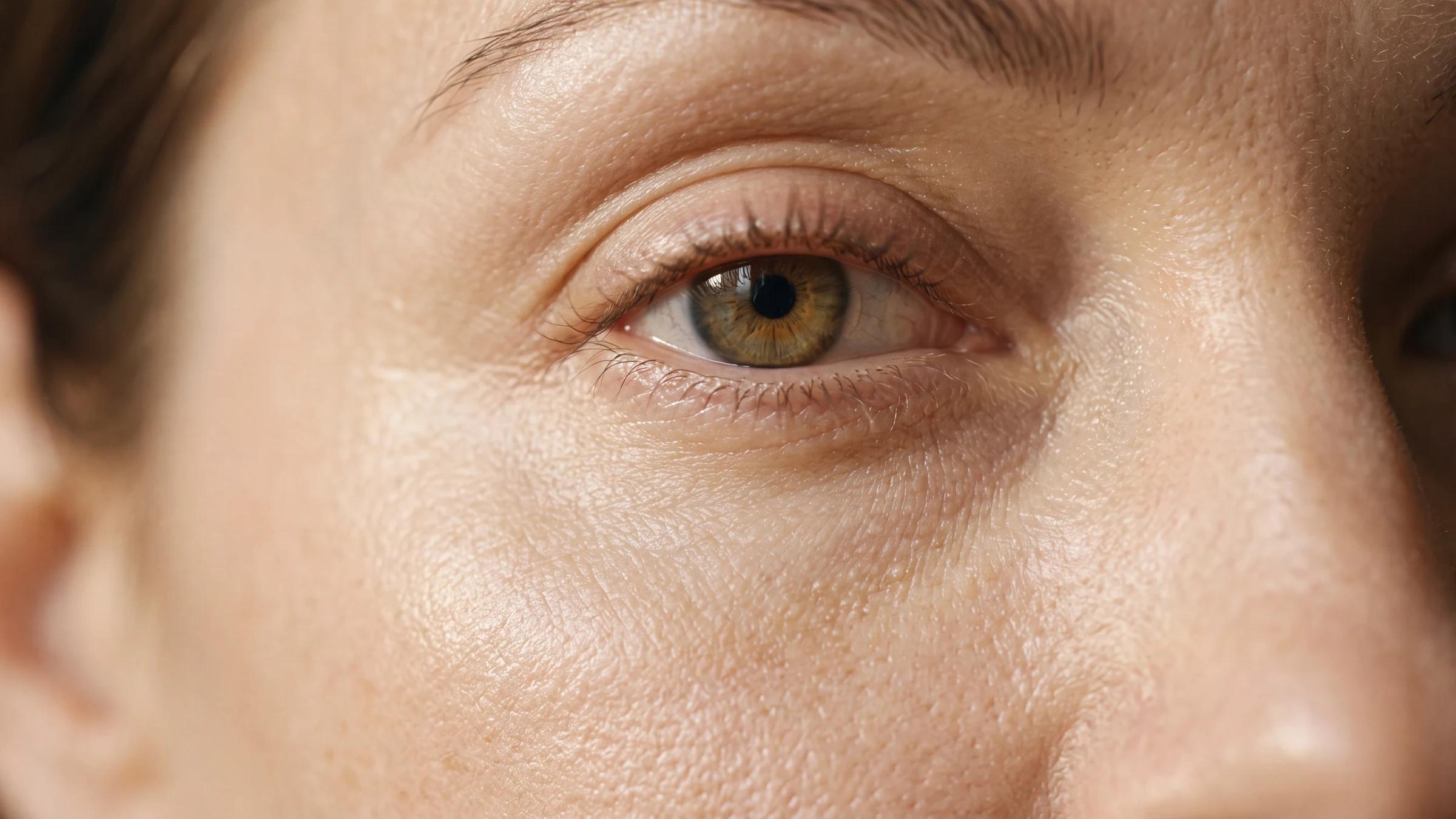 Le Journal · La PeauPolynucleotides for under-eyes: what they do, and what they don’t
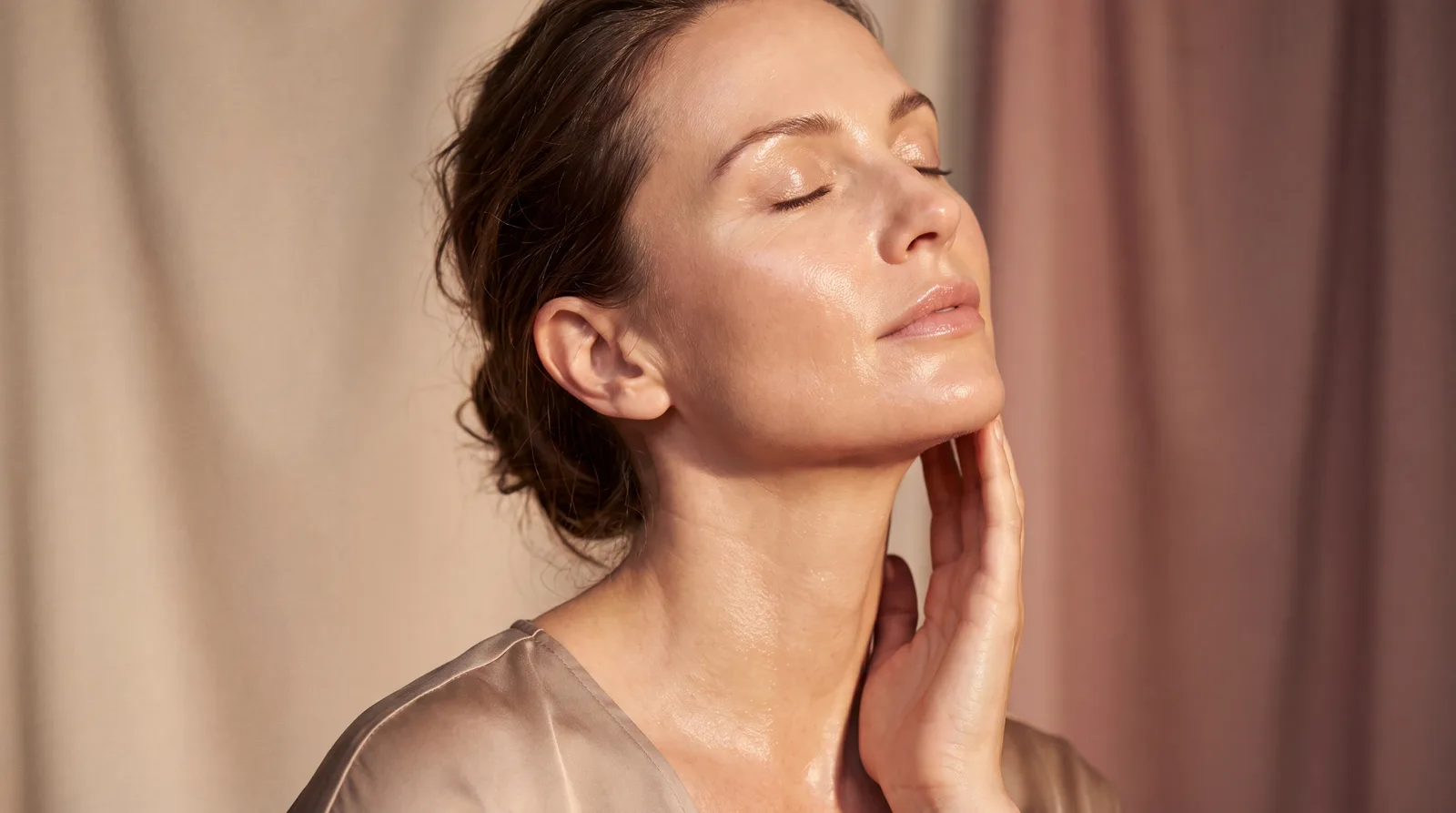 Le JournalPolynucleotides Before and After: What Actually Changes, and When
 Le JournalProfhilo vs Polynucleotides: Two Mechanisms, and Which Your Skin Needs
« Booked with Dr Dana Beiki for polynucleotides twice already and I'm very happy with the results. A very knowledgeable and professional doctor who understands the needs of his patient, and takes as much time as needed to explain and advise. »
Magdalena H.
Polynucleotides · Bath · Verified on Google
Or combined in a programme.
Programmes combine treatments in a set order over a course, priced a little below the same visits booked one at a time.
Treatments related to this one.

Every plan starts with a free consultation with Dr Beiki.
Book a consultation with Dr Beiki, or start free with an online assessment in your own time.
Rated 5.0 on Google · 37 reviews
Free, 30 minutes with Dr Beiki. Nothing to pay to book.
Goodlight Wellness Center · Bath