One moment
Preparing the page.
Loading content…One moment
Preparing the page.
Loading content…Microneedling is collagen induction therapy: fine needles make controlled micro-injuries that prompt the skin to build new collagen. A realistic before and after shows gradual improvement in skin texture, pores, acne scars and fine lines over a course, not a single dramatic session. In a 2025 systematic review pooling 21 studies and 723 patients, 83 per cent reported satisfaction, with short-lived redness the commonest effect. It runs as a course of three to six sessions about four weeks apart, uses no heat so the pigment risk that follows laser is low, needs a day or two of downtime, and the result keeps building for months afterwards. A consultation at the clinic in Bath is free.

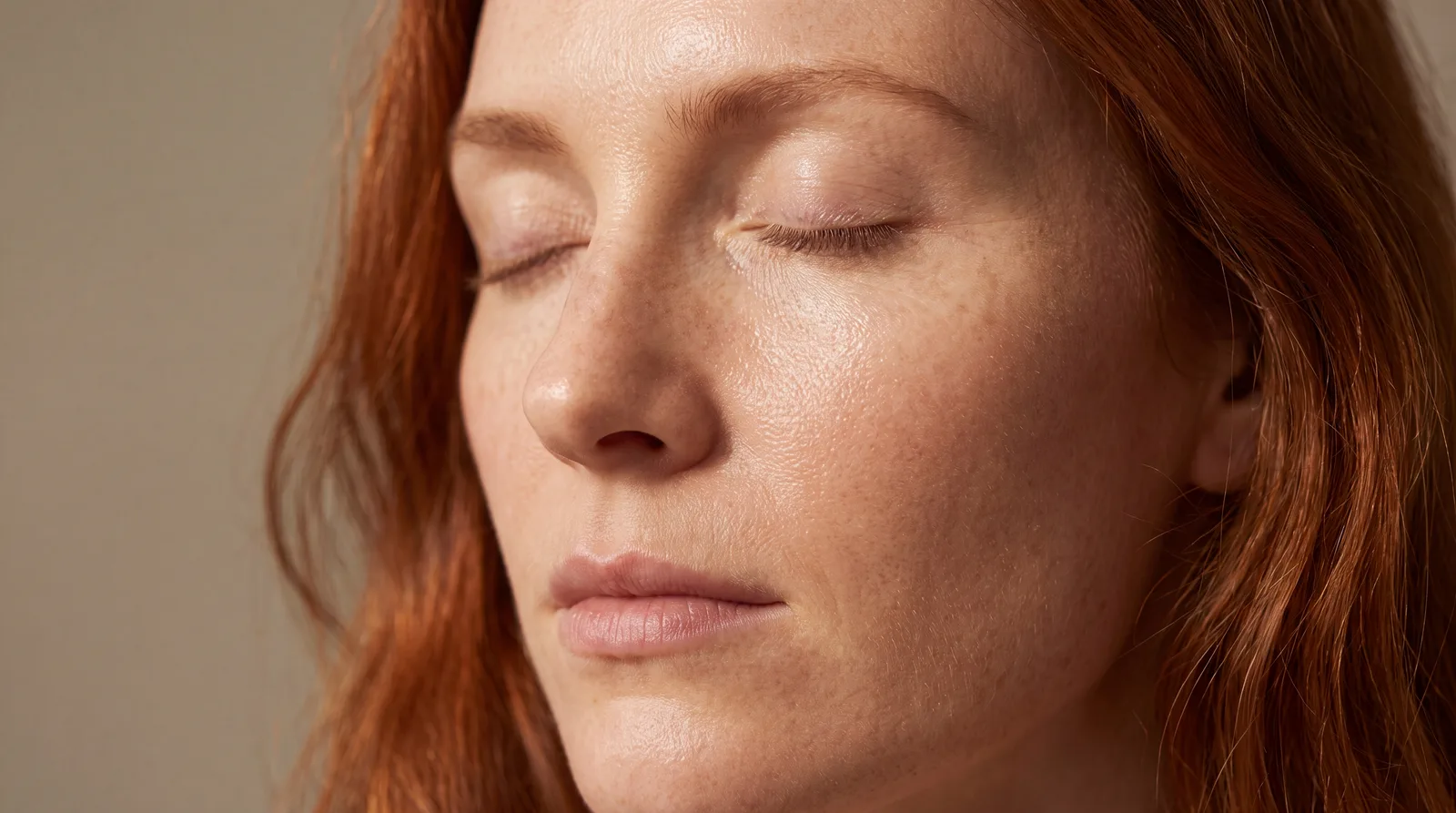
Search "microneedling before and after" and you will scroll past a hundred dramatic changes, half of them a single session, some of them a filter, a few of them another treatment entirely. It is the wrong place to set your expectations. Microneedling is a genuinely good treatment, but it works the way collagen works: gradually, over a course, and more honestly than the photographs suggest.
If your skin has lost its smoothness to acne scarring, open pores, a dull or crepey texture, or the first fine lines, microneedling is aimed at exactly that. Not a new face. Skin that is your own, rebuilt a little from the inside so it reads as better in quality. Here is what a realistic before and after actually looks like, and how many sessions it honestly takes.
Microneedling is collagen induction therapy. A device studded with fine needles is passed over the skin, making hundreds of tiny, controlled channels a fraction of a millimetre to a couple of millimetres deep. Those micro-injuries are just enough to trigger the skin's repair response without the burn of a laser, and the repair lays down fresh collagen and elastin. In studies that new collagen is deposited in the normal lattice pattern of healthy skin rather than the parallel bundles of scar tissue, which is why it improves texture rather than hardening it (mechanism, PMID 39086171).
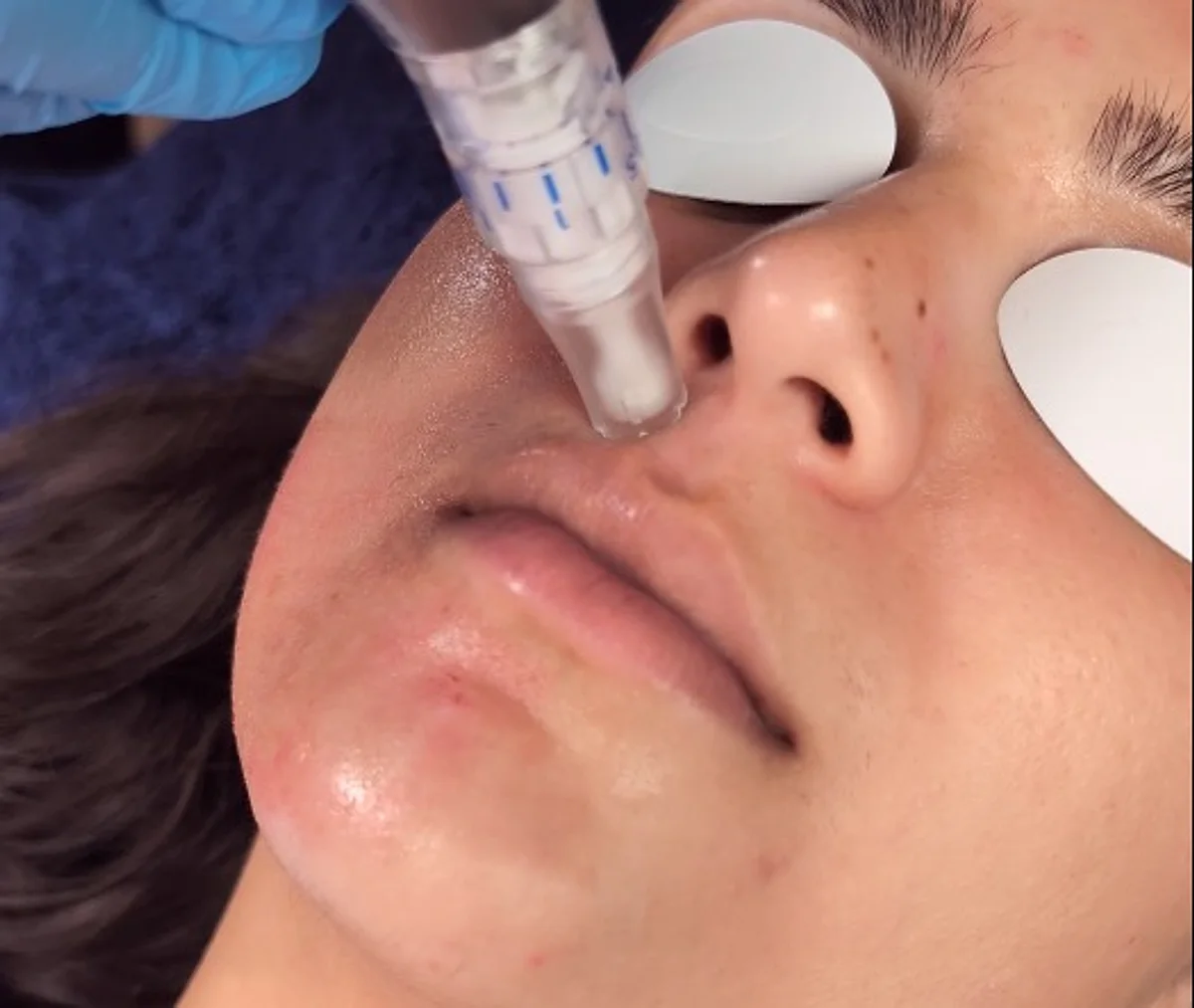
This is also where the confusion between the pharmacy derma roller and a clinical treatment lives. A home roller works at the surface; a medical device such as the SkinPen, set to depth by an experienced hand, reaches the layer where collagen is actually made. Same idea, very different result.
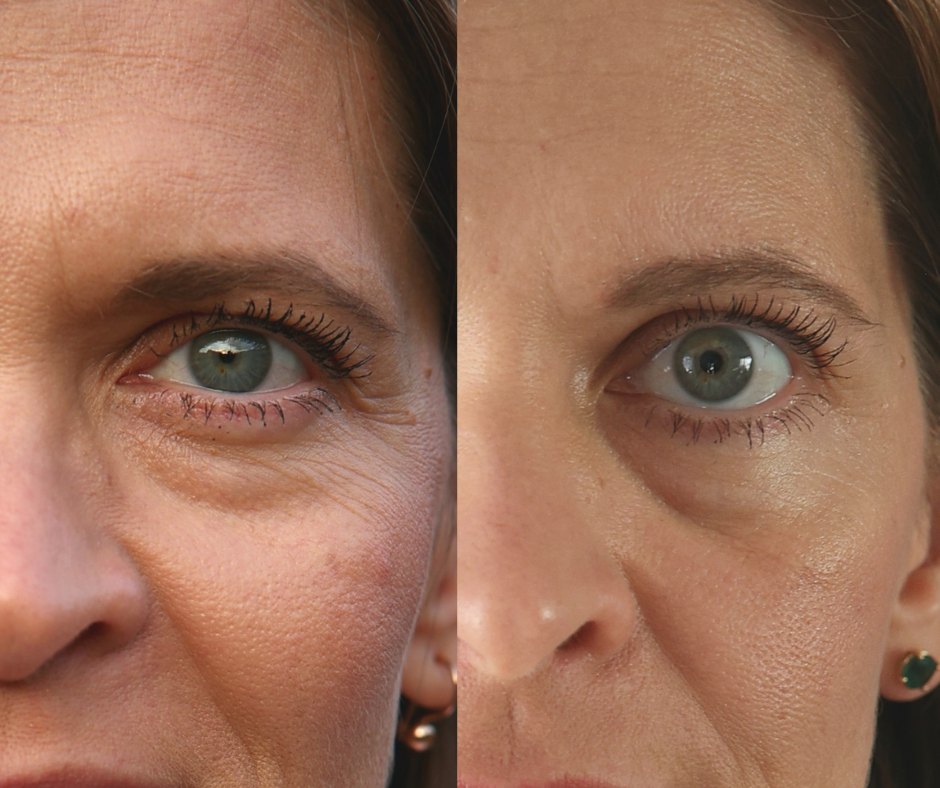
Read honestly, a microneedling before and after shows a change in the quality of the skin: smoother texture, tighter-looking pores, softened acne scars, and fine lines that read less deeply. Pooled across the trials it improves wrinkling, texture and photoageing, and 83 per cent of patients came away satisfied (2025 systematic review, PMID 40542236). For acne scarring in particular the evidence is good: a meta-analysis found microneedling effective and, notably, free of the post-inflammatory pigmentation that can follow laser resurfacing (acne-scar meta-analysis, PMID 35426044).
What it does not show, if it is honest, is a dramatic one-session lift. It will not tighten heavy jowls or replace lost volume, and a single treatment is a start rather than a finished result. When a before and after looks transformed after one session, either the lighting is doing the work, or something more than microneedling was done.
This is the question the photographs rarely answer. Microneedling works cumulatively: nine trials in ten used multiple sessions, because each one adds a further round of collagen (PMID 40542236). In practice that means a course, usually three to six sessions about four weeks apart, with the fuller result appearing over the following months as the collagen matures. In the studies of collagen deposition the improvement keeps building for up to two years (PMID 39086171). So the honest comparison is not before and after one treatment, but before and after a course.
| When | What you see |
|---|---|
| First day or two | Skin looks flushed, as though mildly sunburnt, with redness, sometimes mild flaking and occasionally a little bruising; makeup off for about 24 hours to let the channels close. |
| After one session | A start rather than a finished result. The collagen is only beginning to build. |
| Across a course (three to six sessions, about four weeks apart) | Smoother texture, tighter-looking pores, softened acne scars and fine lines that read less deeply. |
| Over the following months | The fuller result appears as the collagen matures. |
| Up to two years | Collagen keeps being deposited and the improvement keeps building. |
The counter-intuitive part is that injuring skin should make scar tissue, and microneedling does not. The micro-wounds are small enough that the new collagen forms in the normal, healthy lattice rather than the parallel bundles of a scar. That is the whole trick: a controlled wound that heals back better than it was.
Dr Dana BeikiIt has one of the kinder safety profiles in aesthetics. The common effects are short-lived: redness for a day or two, sometimes mild flaking, occasionally a little bruising (PMID 40542236). Because it uses no heat, it carries a low risk of the pigment changes lasers can cause, which makes it one of the safer resurfacing options for darker and more sensitive skin (PMID 39086171).
As for pain, with numbing cream first most people describe a prickling, sandpaper sensation rather than real pain, and it is over quickly. It is not done in pregnancy, as a precaution rather than because harm is proven.
Expect your skin to look flushed, as though mildly sunburnt, for the first day or two, occasionally with a little flaking as it settles. Leave makeup off for about 24 hours to let the channels close, keep it simple with a plain moisturiser and hyaluronic acid, and avoid sun, heat, exercise and active ingredients like retinol and acids for a few days. Gentle is the whole rule, and sunscreen once the redness has gone is not optional.
They are related but not the same. Plain microneedling is the collagen-induction treatment described here. Radiofrequency microneedling adds heat through the needles for a firmer, tightening effect. On acne scars it performs comparably to fractional CO2 laser, with a shorter recovery and, in one comparison, no post-inflammatory pigmentation at all (systematic review, PMID 41927510). I do not offer it here, and I would rather say so than imply otherwise: where firming is the goal, what I use is the laser lifting route or Profhilo Structura. The vampire facial is the same treatment with your own platelet-rich plasma driven into the fresh channels, and for acne scarring in particular it is measurably the stronger version. The reason is elegant. Those micro-channels are not only an injury to heal, they are an open delivery route into the dermis, and your platelets carry a payload of growth factors, the platelet-derived, transforming and vascular ones, PDGF, TGF-beta and VEGF, that instruct fibroblasts to lay down collagen. Drive that concentrate in through the channels and you amplify the exact signal the needling has just started. A meta-analysis of four randomised and ten split-face controlled studies, 472 patients in total, found the combination roughly tripled the odds of a better than fifty per cent improvement on the Goodman scale against microneedling alone, and raised patient satisfaction (meta-analysis, 472 patients, PMID 35237616). Ten of those fourteen studies were not randomised, which is worth knowing before you weigh the number. One detail decides whether it works: the plasma has to be driven in as the needle passes, not painted on afterwards.
Microneedling suits skin whose problem is quality and texture: acne scarring, enlarged pores, rough or dull skin, early fine lines. It is a poor choice for heavy laxity, deep folds or lost volume, which need different tools, and I will say so rather than sell you a course that cannot deliver. Where it fits, it is one of the most reliable and best-tolerated things I offer.
If you are weighing whether your skin is the kind microneedling actually helps, a consultation is where I look properly and tell you how many sessions it would realistically take.
Strip away the marketing and microneedling is a precise piece of regenerative biology. A controlled wound, placed at the right depth and density, does not so much damage the skin as recruit it: it sets off the body's own repair cascade, inflammation, then proliferation, then remodelling, and steers that cascade into laying down new collagen where you want it. The whole craft is staying inside the regenerative window. Too shallow and nothing happens; too deep or too aggressive and you cross into the scarring the treatment exists to reverse. Depth, density and spacing are not dials on a device, they are the line between induction and injury, and knowing where that line sits is most of the job.
It is also why the result is a course rather than a session. You are running the skin through repeated, controlled cycles of remodelling, and in the studies collagen keeps being deposited for up to two years afterwards. What I do is engineer your own healing on a schedule your biology can sustain, and read, session by session, where your skin sits on that curve. Bring it to me and I will tell you how far a course can move it.
If you want the same endpoint reached with more control over depth and target, that is what a laser buys, along with more downtime and more risk to manage. The comparison is set out in the article on laser skin resurfacing.
If your reason for considering microneedling is acne scarring specifically, the shape of the scars decides what will work, and that sorting is set out in the article on laser treatment for acne scars.
However you begin, it starts with a conversation.
Book a consultation with Dr Beiki, or start free with an online assessment in your own time.
Rated 5.0 on Google · 30 reviews
Goodlight Wellness Center · Bath