One moment
Preparing the page.
Loading content…One moment
Preparing the page.
Loading content…Cheek filler is hyaluronic acid placed deep against bone to restore midface structure, not to add fullness. It suits one finding straightforwardly: genuine loss of deep fat, which falls to less than half by the mid-seventies while the superficial fat barely changes. It supports a changed skeleton within a limit. It is the wrong answer when the tissue has descended, when a compartment has enlarged rather than shrunk, or when the real complaint is skin quality. One test at home: lift the cheek with a fingertip. If it looks better lifted than fuller, the finding is descent, and filler is not what you need.


You have probably been told that you have lost volume.
It is the standard explanation, offered in almost every consultation in the country, and it comes with its own obvious solution. The face has emptied, so it should be refilled. Most cheek treatment sold in Britain rests on that one sentence.
The literature is considerably less certain about it than the sales pitch is. Faces do lose fat, but not evenly, and where it goes from decides everything. So this is organised around the only question that matters before anyone picks up a syringe: which of four findings is yours, how you can get a rough answer at home, and what cheek filler would actually do to each one.
The deflation story is not invented. It is imprecise, and the imprecision is what produces bad treatment.
The clearest measurement comes from dissecting and weighing the midface compartments of forty bodies. In those over seventy-five, the deep compartments weighed less than half what they did in the younger group, 1.48 g against 3.41 g. The superficial compartments showed no statistically significant difference. So the face does empty. It empties underneath.
That superficial finding is not one study's quirk. When the same people were scanned about a decade apart, superficial cheek fat volume showed no statistically significant change either, though in only fourteen people, and a null result in a group that small proves little on its own. What does change is position. A computed tomographic comparison of younger and older cadaver heads found the upper third of the compartments thinner, the lower third thicker, and the whole sitting further from the infraorbital rim. Loss underneath, descent on top, and two layers that are worth assessing separately rather than as one soft space.
A 2025 review of the anatomical assumptions behind facelift surgery is more sceptical again. Reading fifty-four studies, it reports that the facial skeleton remodels rather than simply resorbs, that some fat compartments hypertrophy and not all of them migrate, and that the retaining ligaments are robust, non-elastic structures rather than things that stretch. It also says something the rest of the field should repeat more often: the available research is conflicting, mostly of low quality, and does not support definitive conclusions.
This is a live argument rather than a settled fact, and I would rather you knew that than were handed a tidier story. What survives all of it is the practical part. The loss is deep, the descent is superficial, and the bone underneath has changed shape. Which of those is driving your face is the question worth answering before anyone fills anything.
Four findings account for nearly every midface I assess. They overlap in real faces, and an examination is what separates them properly, but the descriptions below are close enough that most people recognise themselves.
One thing to hold on to as you read. The right depth never changes: restoring structure means deep against bone, every time. That is set by the anatomy rather than by anyone's preference. What the finding decides is not the depth. It is whether to inject at all.
| The finding | What you see | The five-second test | Cheek filler | What else to look at |
|---|---|---|---|---|
| Deep volume loss | Flat beneath the cheekbone; light no longer catches there | Ten-year photo: has the cheek emptied? | Yes. Deep against bone, usually less than you expect | This is the finding it treats |
| Descent | Fold deepened, jawline softened, fullness sitting low | Fingertip lift: does it look better lifted than fuller? | Not as fill. A little, high and deep, can support. Filling the cheek makes it heavier | Threads, energy lifting, surgery |
| Skeletal change | The midface sits back rather than down | Profile photo: judge projection, not fullness | Within a limit | Surgical options past that limit |
| Enlarged compartment | The lower cheek is fuller than it used to be | Ten-year photo, bottom half of the cheek | No. Makes the feature more prominent | Support higher, lighter, or nothing |
What it looks like. The complaint is usually vague. The face looks tired, or wider, or the eyes look smaller, and make-up sits differently than it used to. What has happened is that the light no longer catches where it did: either the cheekbone has lost projection, so there is no edge to catch it, or the deep medial cheek fat beneath it has emptied and left a shadow that reads as gaunt rather than sculpted.
How to check. Find a photograph of yourself from ten years ago in similar light. Ask one question of it: has the cheek emptied, or has it moved down? Deep loss looks like the same face with something taken out from underneath. The jaw and the fold are usually much as they were.
What cheek filler would do. This is what it is for, and it works. Product goes deep, against bone, into the compartment that has actually emptied. It usually takes less than people expect, because you are restoring an edge rather than filling a space, and a small quantity at the cheekbone changes how light falls across the whole midface.
If it is this, it is still worth asking how much of the flatness is bone rather than fat, because that changes how much can be achieved. See finding 3.
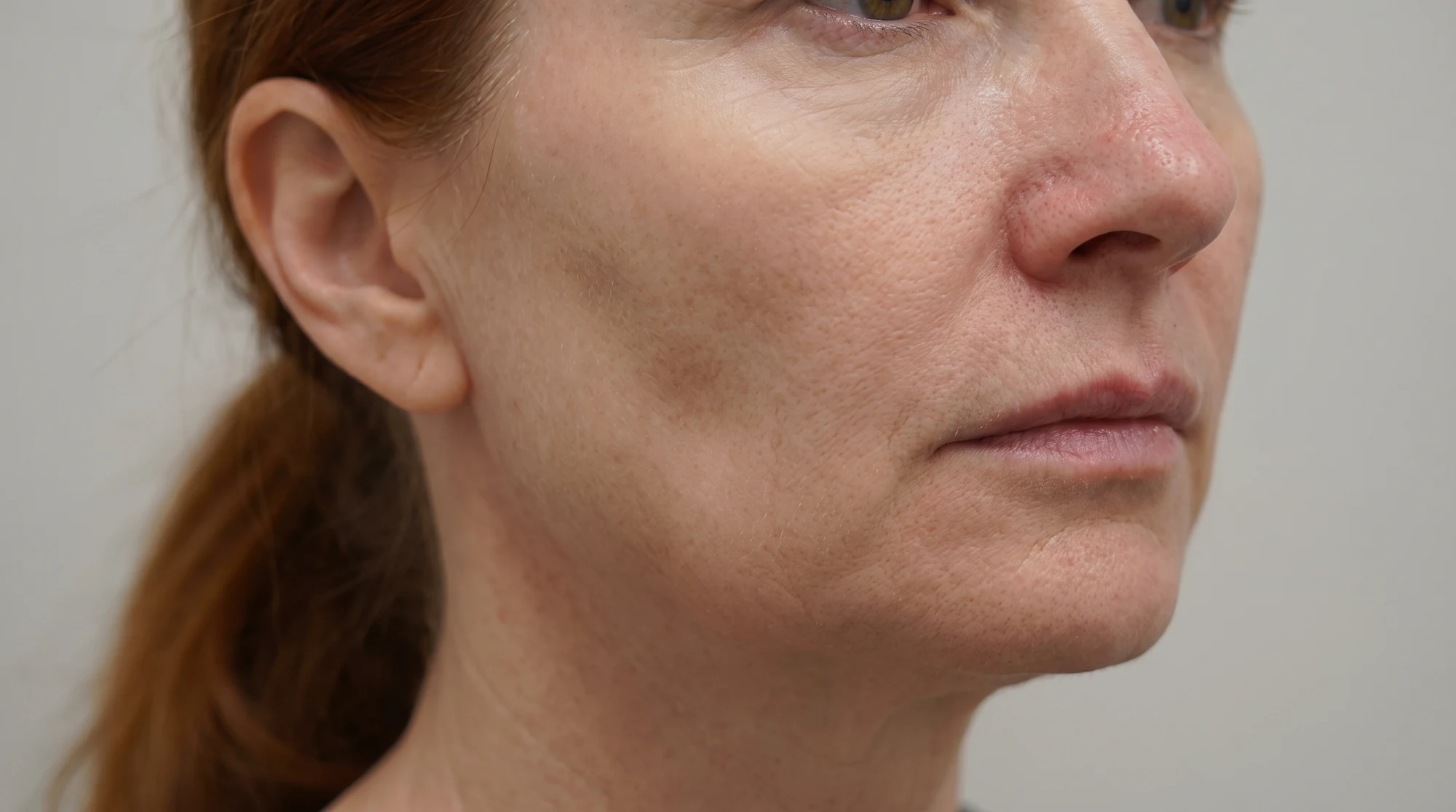
What it looks like. The face has not so much emptied as slid. The nose-to-mouth fold has deepened, the jawline has softened, and there is fullness low in the cheek that was not there before. Most people point at the fold. The cause sits above it: dissection of sixty hemifaces found the nasolabial segment sits over its own soft-tissue space, bounded below by the maxillary ligaments, which makes the fold the visible edge of a support boundary rather than a line in its own right.
How to check. This is the most useful test in the article, and it takes five seconds. Put a fingertip on the cheek and lift the tissue gently upward and outward, toward the top of the ear. Then look. If the face improves when lifted, the finding is descent. If it only improves when you imagine it fuller, the finding is volume. Almost everyone can tell the difference immediately, and it is the single question the consultation is trying to answer.
What cheek filler would do. Used as fill, make it heavier. Adding volume to tissue that has already fallen loads the thing that is failing. This is where the overfilled look comes from, and it is rarely the product's fault.
The exception worth knowing. There is a real difference between filling a descended cheek and placing a small amount high and deep to support the ligamentous framework, and that distinction is what multi-point techniques such as the eight-point approach rest on. A two-year trial did exactly that, siting filler in the upper anteromedial cheek to support the retaining ligaments rather than to add volume across the cheek, combined with absorbable polydioxanone threads: midface width fell from 149.3 mm to 145.0 mm, and lower-face width from 130.4 mm to 117.3 mm, at twenty-four months. Eleven patients, one centre, and the threads were doing part of the work, so this is not evidence that filler alone lifts a fallen face. It is evidence that where it goes, and how little of it there is, decides whether it supports or weighs. Consensus guidance puts the same point the other way round: treat the aesthetic unit and the primary cause, not the line you can see.
What to look at instead. Where descent is doing most of the work, lifting approaches address it directly, and where it is significant, surgery does more than any injection. Energy-based lifting is set out in the non surgical lifting guide.
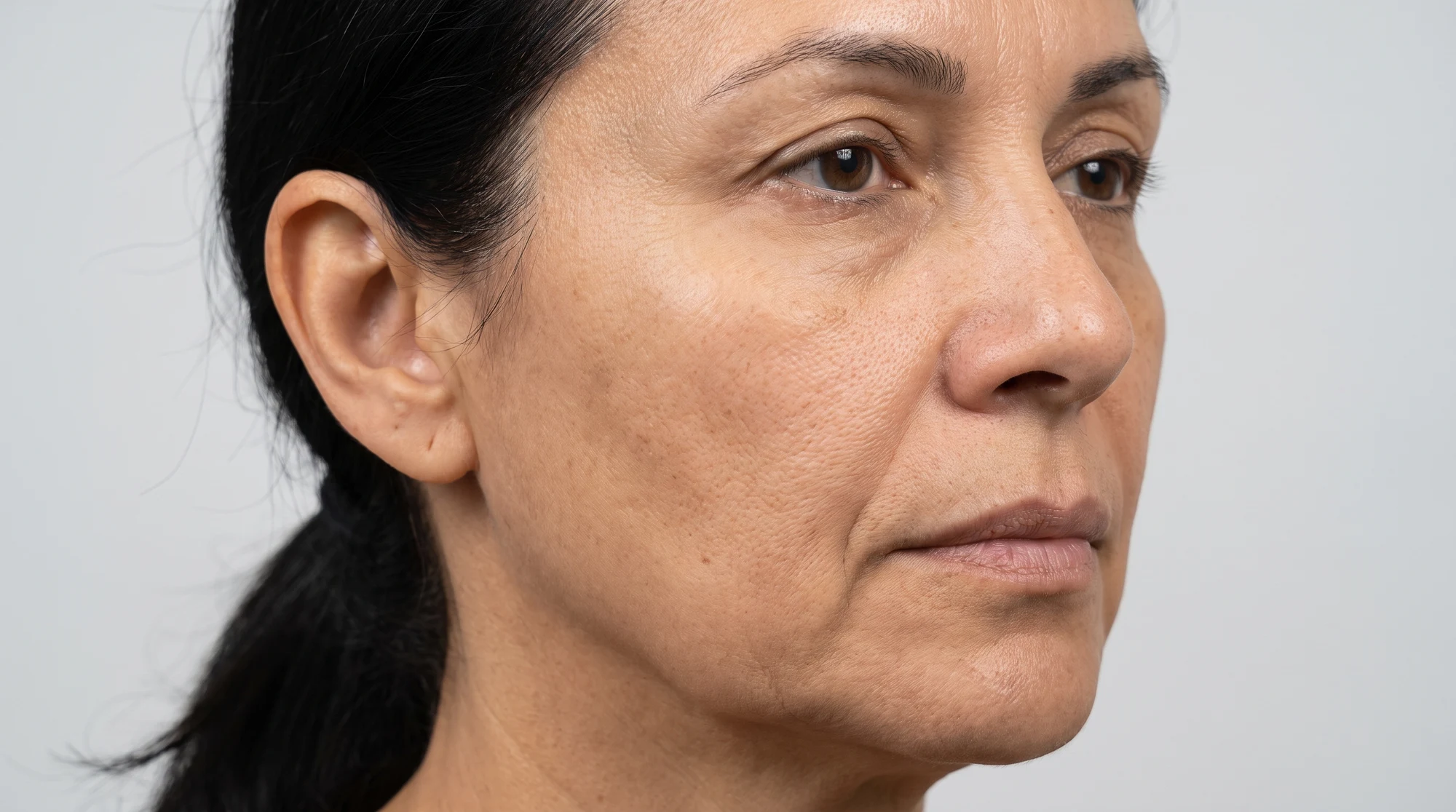
What it looks like. The whole midface sits back rather than down. In profile the cheekbone has less forward projection than it had, the eye looks slightly more prominent because the rim beneath it has receded, and the change reads as structural rather than soft. It tends to be the finding people describe as looking "different" rather than "tired".
How to check. Harder to self-test, and honestly this is the one that needs an examination. A profile photograph from ten or fifteen years ago is the most you can do at home: look at how far the cheekbone comes forward of the eye, not at how full the cheek is.
What cheek filler would do. Deep placement against bone can stand in for lost projection and give the tissue above it something to sit on. It works, within a limit. Past the point where the frame itself has altered, no injectable substitutes for bone, and adding more only widens the face. Being told plainly where that limit falls for you is the most useful thing a consultation can give you.
What to look at instead. Past that limit the options are surgical rather than injectable, and a consultation should say so rather than sell you more product. Where the skeletal change is mild and descent is doing most of the visible work, treat the descent first and reassess the frame afterwards.
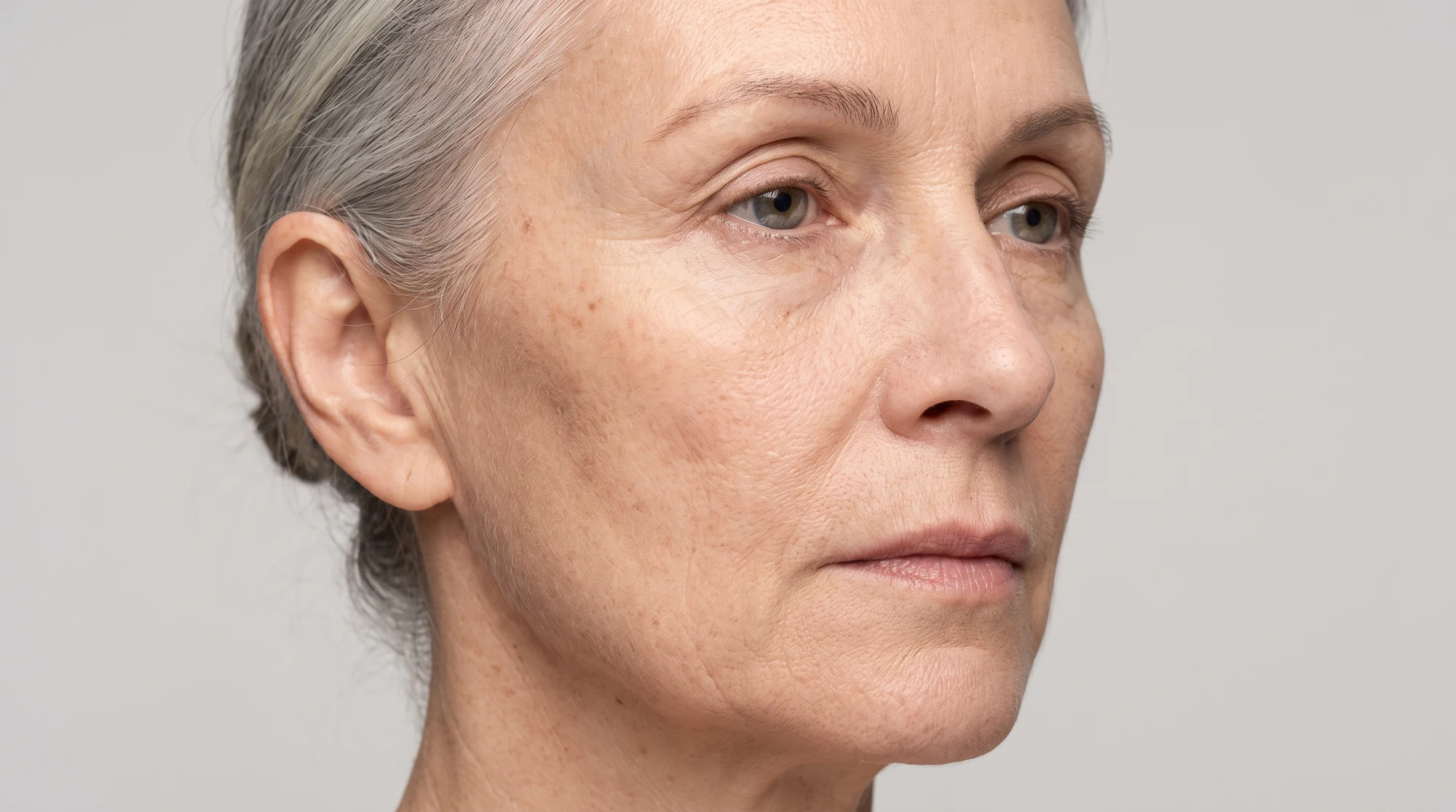
What it looks like. The lower cheek is fuller than it used to be, not emptier. There is a heaviness sitting low, often read as "my face has dropped", and photographs from a decade ago show a narrower lower face rather than a plumper upper one. It is what the imaging predicts: the lower part of the midface compartments thickens with age while the upper part thins, and the 2025 review notes that some compartments undergo hypertrophy outright.
How to check. The ten-year photograph again, but look at the bottom half of the cheek rather than the top. If that area has grown rather than shrunk, filling it is the wrong direction.
What cheek filler would do. Make the exact feature you dislike more prominent. This is the finding most likely to end in a request to dissolve.
What to look at instead. Support higher and lighter, if anything at all, or lifting where descent is part of the picture. Sometimes the honest answer is that nothing needs injecting.
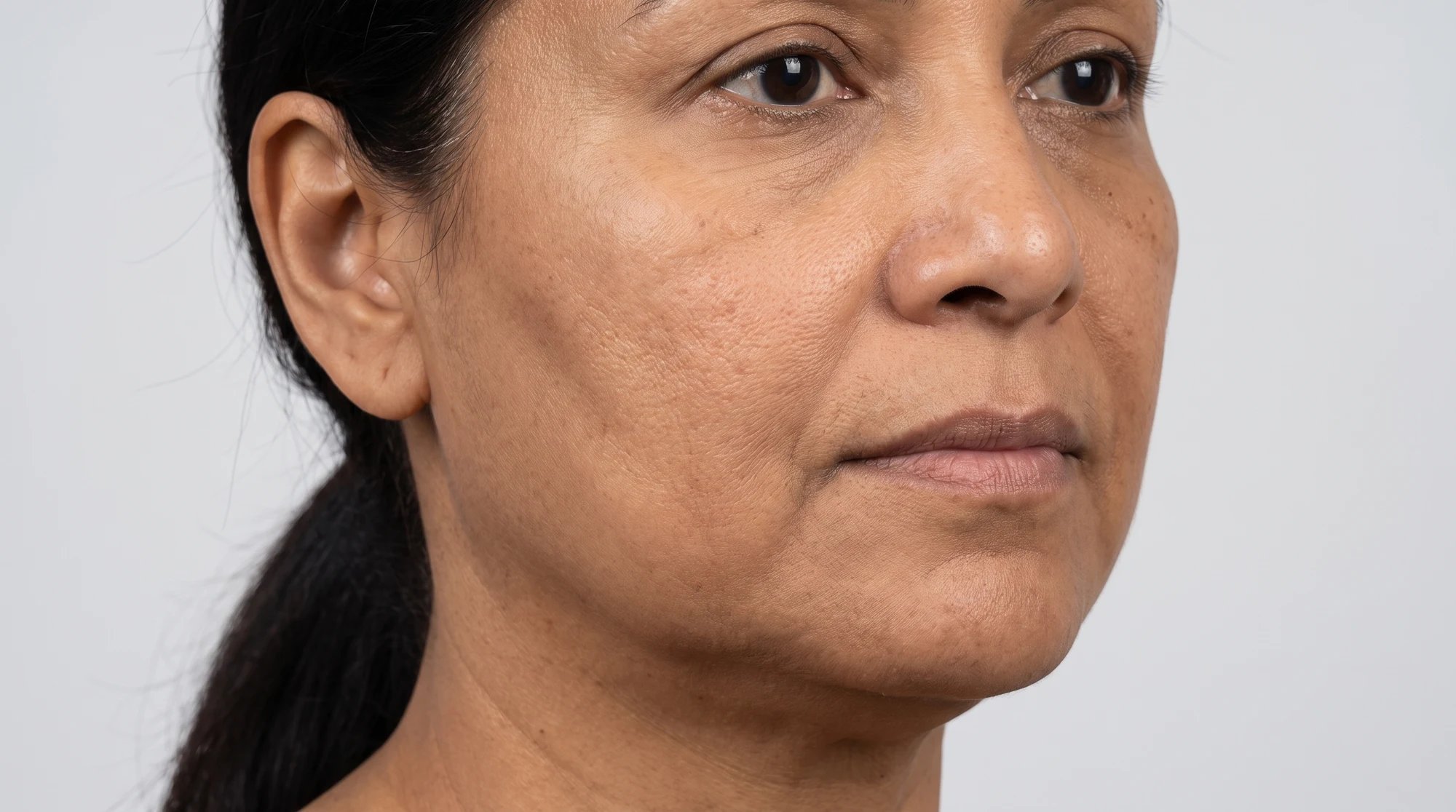
If the complaint is the surface rather than the shape, a crepey or dull midface, then no amount of filler improves skin, and the money is better spent on resurfacing or regenerative treatment. Where the skin below the cheek has gone crepey and the lower face is softening rather than emptying, what you want is firmness without added volume, which is the case for Profhilo Structura. Volume is the wrong answer for a texture problem, however good the volume is.
The midface is not one soft area. It is organised into separate fat compartments, sitting at different depths, behaving differently.
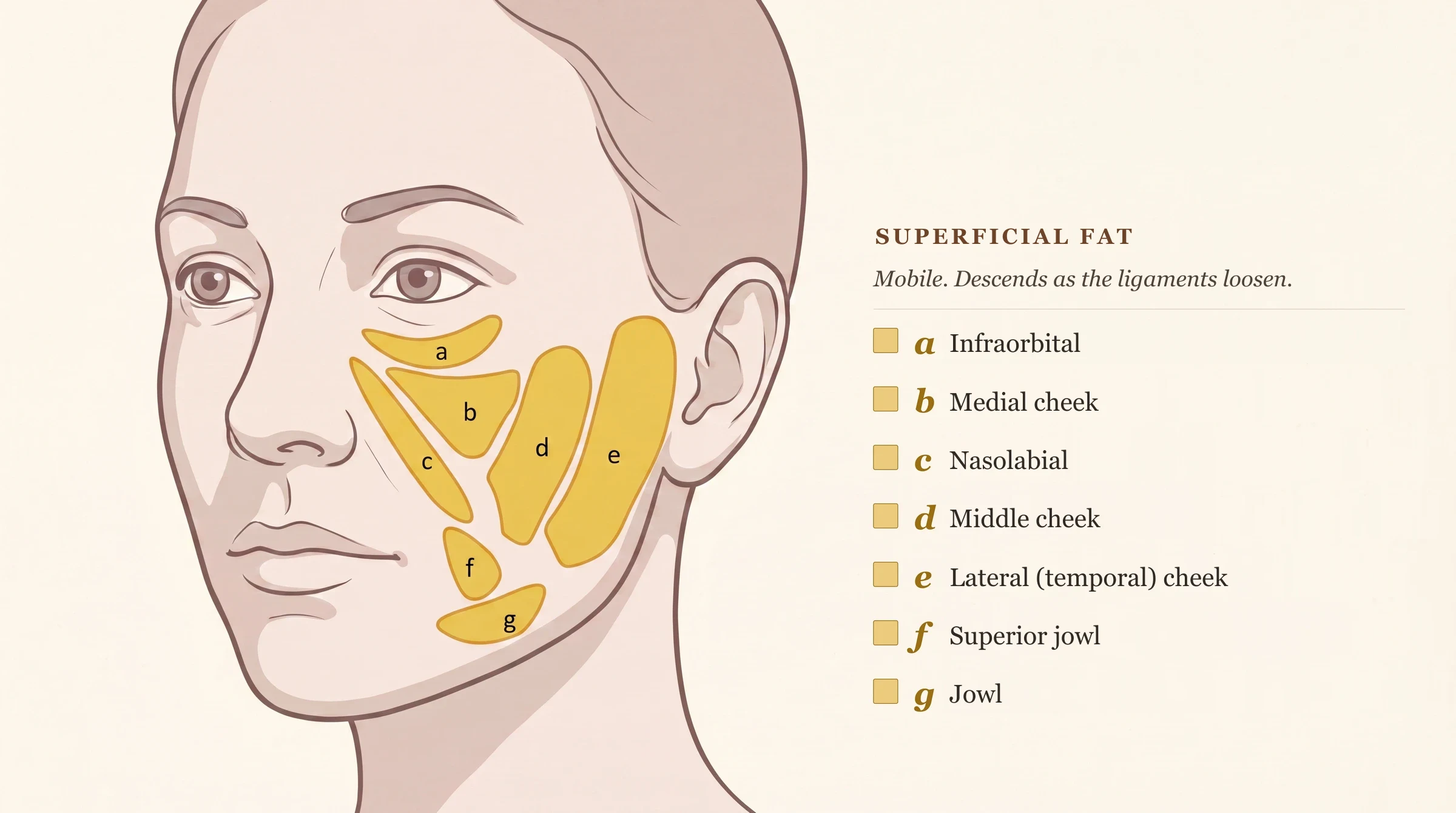
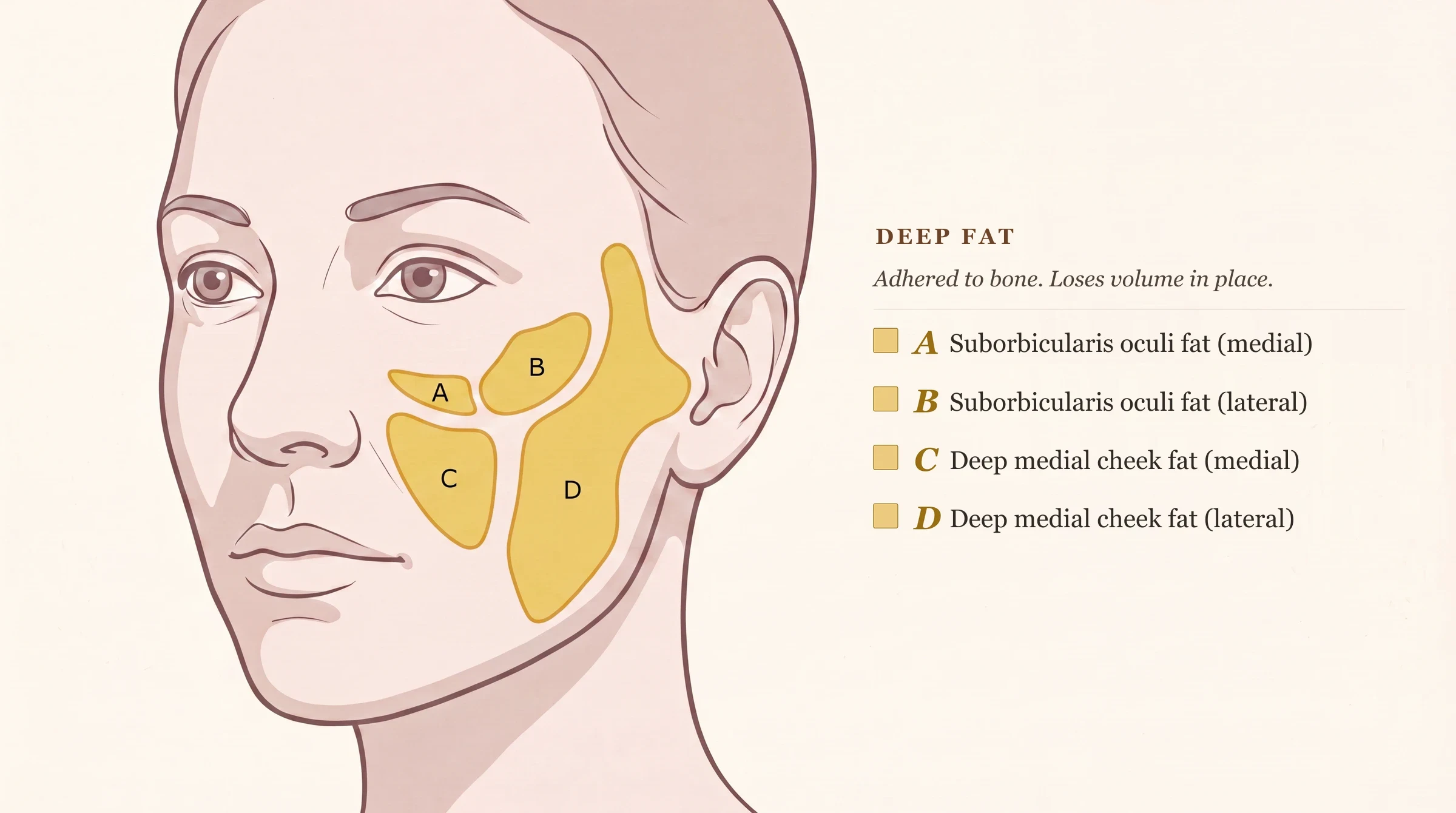
The deep compartments are the suborbicularis oculi fat, medial and lateral, and the deep medial cheek fat. That deep layer is the one that carries projection: a three-layer, ultrasound-guided midface technique is built on the observation that it is deep fat atrophy which reduces midface projection. Above them sit the superficial ones: infraorbital, medial cheek, middle cheek and nasolabial.
Holding the whole arrangement to the skeleton is a set of retaining ligaments, running from bone, through the fibrous layer, into skin. When they loosen the superficial layer slides and the deep layer does not, which is the whole of the difference between findings 1 and 2. The depth each layer sits at is what an injector is choosing between.
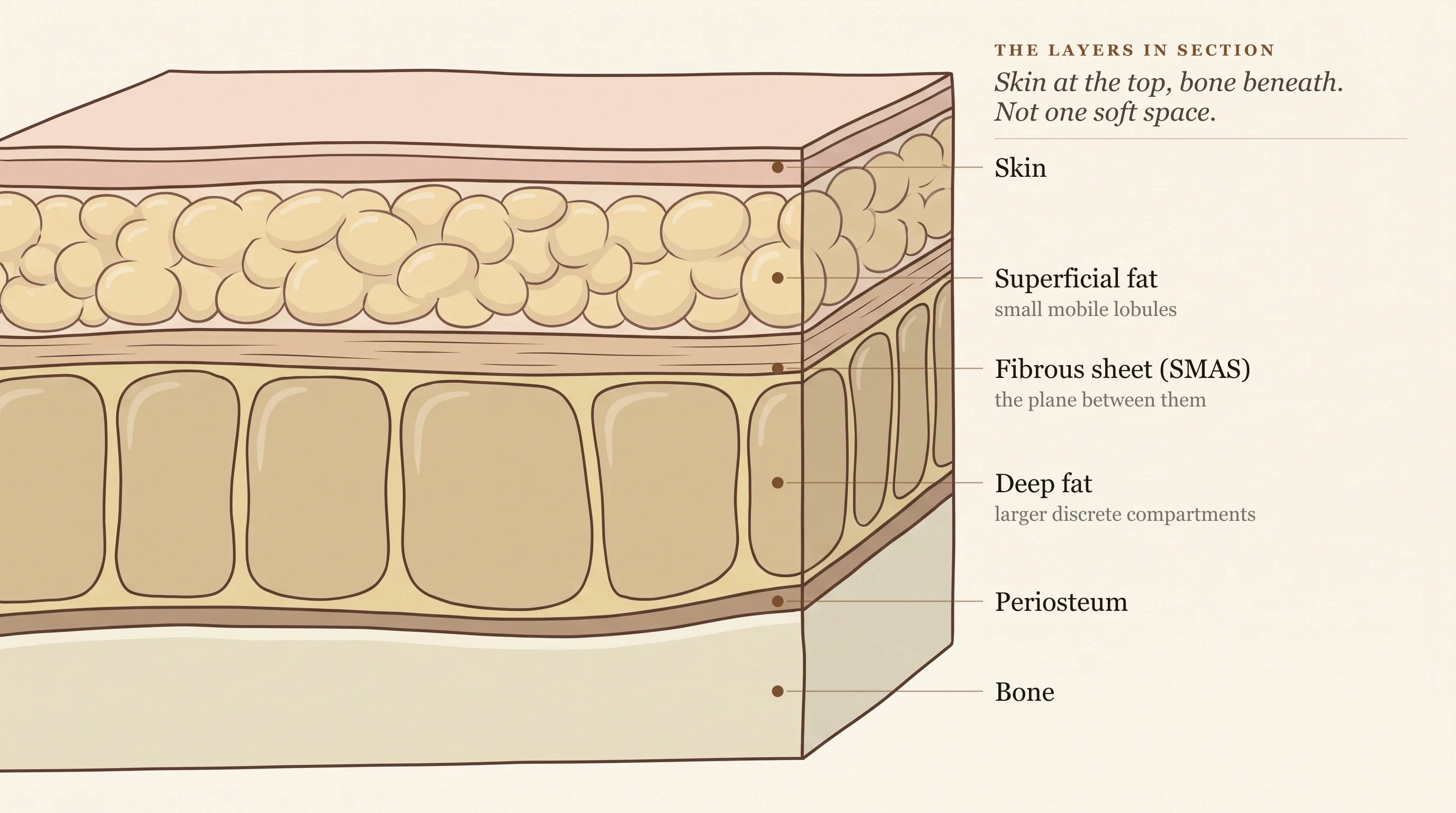
One thing almost nobody accounts for: the deep fat and fascia of the temple and the midface are one continuous system. Ultrasound imaging of forty treatment-naive adults traced that continuity directly, the fat transitioning from a multilaminar arrangement in the temple to unilaminar as it crosses the cheekbone, then back to multilaminar across the midface. A hollow temple and a flat cheek are frequently the same finding seen twice.
The right depth is fixed, as above. Whether the product actually ends up there is not, and that is a different problem.
Filler does not sit obediently in a ball where the needle left it. Live ultrasound imaging of 440 filler treatments in 107 patients showed that its spread follows the retinacula, the fibrous strands running through facial fat, superficial and deep. Place product in the right layer and the direction it travels becomes predictable. Place it in the wrong one and the tissue architecture decides the shape for you.
And it has been measured over time. A separate ultrasound study tracked 100 injections to thirty days, though in only eight patients: the plane of distribution stayed constant in around 90% of cases, and the mean footprint shrank from 22.5 mm² on day zero to 12.9 mm² at day thirty, spreading horizontally more than vertically. The spread around those means is wide, so treat the direction as the finding rather than the exact millimetre.
Two useful things follow. The layer chosen on the day is, nine times in ten, the layer it stays in, so that decision is close to irreversible in practice. And the result contracts by roughly two fifths over a month, which is the measured reason your face at day fourteen is not your face at day zero, and why judging a result immediately is judging swelling.
This also explains the commonest late finding I see: a face that photographs well and moves badly. Static volume looks correct, then animation reveals product sitting in a layer that moves. The answer to that is almost never more filler.
The conventional teaching, which I broadly follow, is that deep placement against bone restores structure while superficial placement adds surface volume that moves.
A split-face study puts a proper dent in the simple version. Twenty patients had superficial injection on one side of the upper midface and deep injection on the other, around 0.78 cc a side. At seven weeks, every score improved significantly, and there was no statistically significant difference between the two techniques.
I am not going to pretend that away. For how an upper midface looks at seven weeks, the evidence says both approaches work. What that study did not measure is how each behaves at a year, how each moves when a face animates, or where each ends up after repeated treatment. My preference for deep placement rests on structure, durability and behaviour rather than on a seven-week photograph, and the honest description of that preference is mechanistically reasoned rather than comparatively proven. You are entitled to know which of those you are being sold.
Rebuilding a fifty-year-old midface to a twenty-five-year-old's curve can look passable at rest and then fail on a smile, the cheek riding up into the lid or leaving a ledge above the jaw. So I judge a cheek in animation, and against the rest of the face, never on its own.
Dr Dana BeikiThe midface is never assessed alone. It is judged against the width of the jaw, the projection of the chin and the balance of the lower face, which is why a cheek treated in isolation can be technically perfect and still read as wrong. Assessing how your cheekbone width relates to your jaw, and how the midface sits against the lower third, is what stops treatment becoming taste.
International consensus guidance goes further, and is unusually blunt about the cheek specifically. It advises moving away from the youthful face as the standard, toward age-appropriate facial harmonisation, and takes the midface as its worked example: restoring the convexity of a fifty-year-old with reduced skeletal support to the level of a twenty-five-year-old is called inadvisable. The reason given is not taste. Filler can produce a passable result at rest and then misbehave in movement, the midface impinging on the lid-cheek junction when smiling, or leaving a discernible ledge between the area under the cheekbone and the lower face. Their advice is to assess the patient before, during and after injection, and in animation rather than only at rest.
One caution, since the industry sells it constantly: the golden ratio, phi, is not supported by evidence. A systematic review found no association between the golden proportion and facial evaluation scores in any ethnicity, and the faces studied did not follow it. Measuring proportion is sound clinical discipline. Claiming a Renaissance constant governs your face is marketing.
Look at the lower eyelid, not the cheek. In a good result the junction between eyelid and cheek is shorter and smoother, because the midface has come up. In a merely filled result the cheek is bigger and that junction is unchanged.
Look at the smile. Superficial volume announces itself when the face animates, which is why so many before and afters are static.
Look at the width. Wider at the front rather than higher at the side means the wrong compartment.
Ignore anything taken on the day, since the footprint contracts by around two fifths over the following month.
The cheek is not the face's highest-risk area for filler, but it has vessels that must be respected: the infraorbital artery has been mapped precisely because the midface has its own danger zones, and branches of the facial artery run close by. The rare serious event with any facial filler is vascular, from product entering an artery. An expert consensus on intravascular injection, written for calcium hydroxylapatite, sets out the preventative measures: slow, low-volume injection, the correct plane, and cannulas where appropriate, though cannulas reduce the risk rather than remove it. Where on the face this risk actually concentrates, and the wider safety of dermal fillers, is set out in the guide to dermal fillers.
One point specific to hyaluronic acid: it is reversible. Hyaluronidase breaks it down over hours to days, so a cheek that sits wrong can be dissolved and reconsidered. That reassurance is real, and it is not uniform. A randomised trial that followed three of the common gels beyond four years found one untreated control site still had filler present at four years, and that the products differed about eightfold in the hyaluronidase needed to dissolve them: one responded to 2.5 units per 0.2 mL, another needed more than 20. Nine subjects, and a forearm is not a cheek, so treat those figures as direction rather than dose. "Lasts about a year" and "fully reversible" are both softer claims than they sound.
The evidence here is honest about its own size. The computed tomographic work on compartment change is twelve cadaver heads; the longitudinal scan study is fourteen people; the reversibility trial is nine subjects and was done in the forearm; the footprint measurements are eight patients; the ultrasound work is observational rather than randomised. None of that is reason to ignore it, and all of it is reason not to quote it as settled. The argument about what drives midfacial ageing is genuinely unsettled, and I have quoted the challenge to the volume-loss model because it is well argued, not because the question is closed.
What is well established is the anatomy. What is far less evidenced than the advertising suggests is that one branded product outperforms another.
Broader context is in the guide to dermal fillers.
A cheek filler consultation here starts with the assessment, not the product. It begins by deciding which of the four findings you have, because that, not the millilitre, decides whether filler helps at all. I look at where volume sits and where it has gone, whether the midface has descended, how the cheekbone relates to the jaw and chin, and how the face moves, not only how it holds still.
If the finding is genuine deep volume loss, cheek filler placed deep against bone restores it, usually with less product than people expect. If it is skeletal, the same deep placement can support the frame within a limit, and I will tell you where that limit falls. If it is descent or an enlarged compartment, filler is the wrong tool, and I will say so and say what treats it instead.
The consultation is free, with no obligation to treat on the day. A £40 deposit holds a treatment booking and comes off the cost of treatment. What you pay for first is the assessment, because with the cheek the assessment is the treatment decision.
Ask the person holding the syringe which of the four findings they think you have, and why that one. If the reply is a volume and a price rather than a finding and a reason, you already know what the result will look like.
Restore the structure genuinely missing, at the depth it genuinely sits, leave alone the parts that have not changed, and let the tissue's own architecture do the distributing. Done that way, most people need less product than they arrived expecting.
However you begin, it starts with a conversation.
Book a consultation with Dr Beiki, or start free with an online assessment in your own time.
Rated 5.0 on Google · 30 reviews
Goodlight Wellness Center · Bath